Why the West Midlands is hardwired for growth
The West Midlands’ tech scene has exploded and the region now holds the title of the UK’s fastest-growing tech sector.

According to the latest Digital Economy Playbook published by TechWM, the region’s digital economy is now worth approximately £15.8 billion, and TechWM has set an ambitious target of £100 billion by 2030.
Meanwhile, the 2024–2027 West Midlands Digital Roadmap reports around 2,400 tech and digital businesses employing approximately 144,000 people, highlighting how much the sector has strengthened.
But this is a multi-industry transformation happening at pace. The region now accounts for a quarter of the UK’s gaming industry output and contributes significantly to MedTech turnover. This success is built on powerful partnerships among institutions such as the University of Birmingham, University Hospitals Birmingham NHS Foundation Trust, Bruntwood SciTech, Calthorpe Estates, Aston University, and the University of Warwick. It’s a collaborative model that’s turning momentum into tangible change.
In the most recent year for which data is publicly available, 2,797 new tech companies were incorporated in the West Midlands. That’s a 25 per cent increase on the year before, according to the Greater Birmingham Chambers of Commerce. This kind of scale-up underlines that the West Midlands is no longer an upstart; it’s a heavyweight in its own right.
Events such as Global West Midlands: The Tech That Makes Tomorrow Work illustrate exactly why this is happening. The West Midlands Growth Company brought together sector leaders to showcase world-class R&D, deep-tech talent, and the cross-sector collaboration that will be critical if the UK is to become a science and technology superpower by 2030.
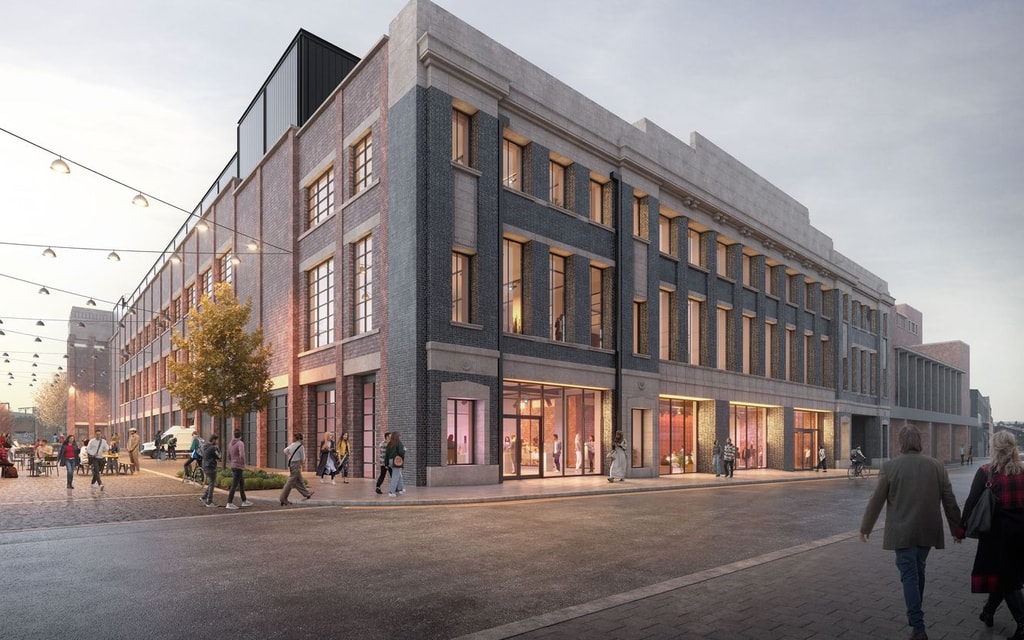
Our work in Digbeth with developer Stoford shows what’s possible when you combine adaptive reuse with bold, forward-looking design. The Tea Factory, a new media broadcasting hub and workplace for the BBC, is reinvigorating historic factory buildings and surrounding streets to create more than 84,000 sq ft of commercial space, alongside leisure facilities and vibrant public areas. A double-height façade will give the building a new public face, connecting it back into the community, while a dramatic atrium will cut through the centre, creating a natural gathering place designed to spark collaboration and creativity,
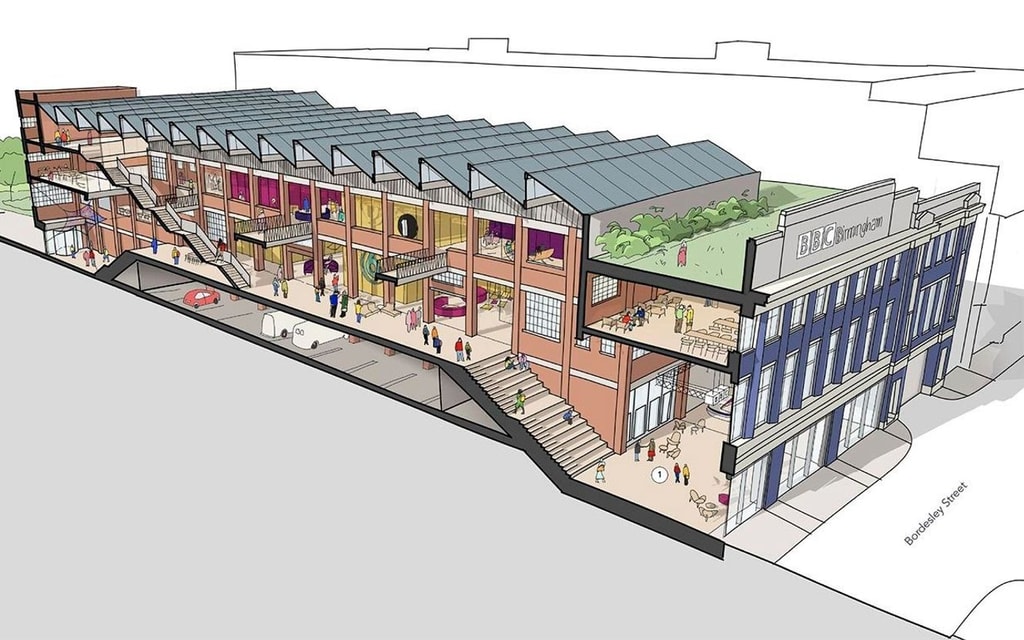
Inside, flexibility is key. The Tea Factory will house radio studios, TV production suites, editing rooms, and collaborative workspaces, all designed on sustainable principles. Our low-carbon strategy re-uses as much of the existing structure as possible, and we’re integrating rainwater harvesting, south-facing photovoltaics, and a brown roof to boost local biodiversity.
A building like this shows how towns and cities like Digbeth are reimagining themselves for a greener, more connected future, rooted in rapidly growing industry. The Tea Factory forms part of a wider regeneration of Typhoo Wharf, breathing new life into an 800,000 sq ft masterplan of residential, commercial and public spaces.
Vitally, it also sits at the heart of an established creative quarter, which now includes the new home of MasterChef, and ambitions from Stephen Knight to develop globally significant film studios to capitalise on the burgeoning gaming, virtual reality, and AI industries in the region. This area is directly linked to the Birmingham Knowledge Quarter via the new Curzon Street Station (the HS2 terminal) and the transformative Smithfield Development.
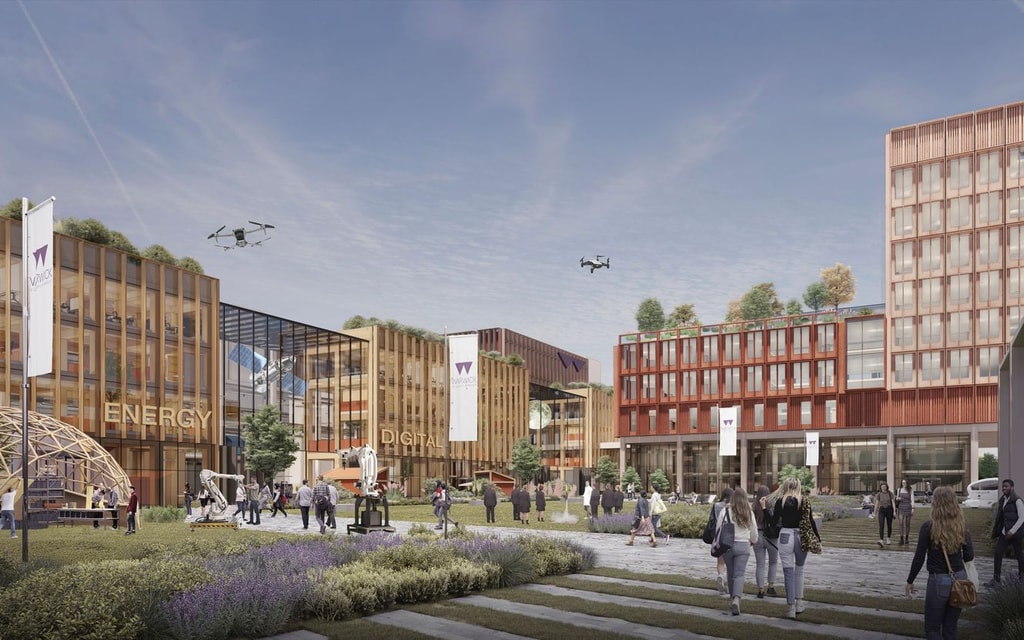
Further from Birmingham. at the University of Warwick, BDP is leading the design of the STEM Connect Programme, a new precinct that will elevate science, technology, engineering, and mathematics education and research. The vision is to create low-carbon, adaptable buildings that create collaboration between academic departments, improve engagement with tech companies, and invite public access to pioneering research.
These new facilities will sit within a revitalised university green — a high-quality, biodiverse public space designed for events and interaction. With high-performance façades, green roofs, on-site energy generation, and innovative building services, the project is targeting Passivhaus, BREEAM Excellent, and WELL Platinum certifications. This isn’t just progress for the University, it’s a major investment in the region’s economic and technological future, creating a dynamic, sustainable environment where business, research and innovation collide.
What sets the West Midlands apart from other regional tech hubs is the unique energy powering its growth: a mix of manufacturing heritage, excellent transport infrastructure, academic excellence, and a strong talent pipeline. And this growth is globally significant. The region secured 57 per cent of all Indian foreign direct investment into UK tech in 2020, and the concentration of students studying core tech disciplines locally remains high, helping to maintain a vibrant, growing skills base. Still, challenges remain. We must better coordinate across public, private, and academic spheres to unlock the region’s full potential.
Projects such as Bruntwood’s Birmingham Health Innovation Campus (with University of Birmingham and Birmingham City Council) and the Birmingham Knowledge Quarter (with Aston University and the City Council) are fantastic examples of collaboration in action. But closing the skills gap and ensuring tech companies can access suitable, flexible space near partners must continue to be priorities.
As demonstrated by our work on the Tea Factory, part of the solution lies in rethinking Birmingham’s existing building stock: creatively reusing and adapting assets to serve a fast-moving tech economy. Flexible, civic-minded design that enables innovation, community cohesion, and collaboration will be crucial.
Looking ahead, Birmingham’s evolution as a global tech powerhouse will depend on how boldly it embraces change. Adaptable spaces, sustainable developments, and a relentless focus on collaboration will be the fuel that drives future growth. As architects, we have a responsibility to challenge assumptions and create environments that inspire. We must offer designs that are energy-efficient, resilient, and ready to keep pace with the fast-moving innovation all around us.
The West Midlands has already demonstrated leadership. Now, it’s time to push further by building a dynamic, sustainable, and inclusive tech ecosystem that sets new standards for the UK and the global economy.