Historic Grosvenor Square redesigned as climate-resilient urban garden
Historic public landscapes have a vital role to play in helping cities respond to the challenges of climate change.
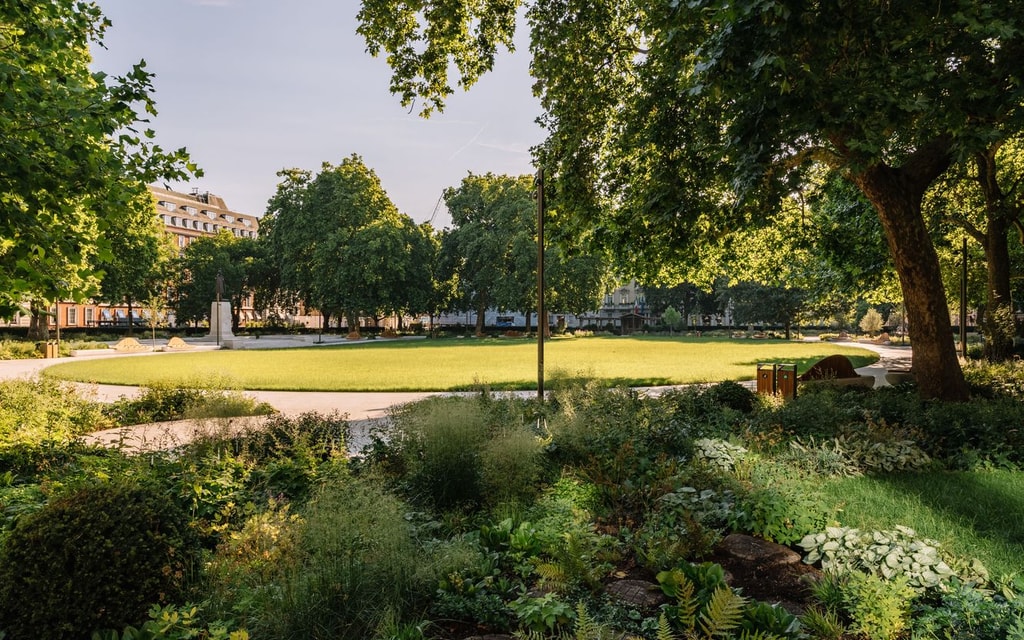
The transformation of London’s Grosvenor Square sets a new benchmark for what urban green spaces can achieve for both the environment and the communities they serve. It stands as a powerful example of how landscape-led design can unite ecology, heritage and people, creating healthier, more resilient and prosperous cities for future generations.
Reopened following a £25 million investment, Grosvenor Square has undergone only its fourth redesign in almost 300 years. In collaboration with Grosvenor, BDP led the multidisciplinary design and delivery of a landmark transformation. Integrating BDP’s in-house expertise in landscape architecture, architecture, lighting and sustainability with an exceptional design team, including concept originator Tonkin Liu and the late Professor Nigel Dunnett, the project restores the square’s historic connection to nature while creating a resilient, biodiverse and future-ready public space that delivers lasting environmental and social benefits for London today and into the future.
Originally laid out in the 1720s as a ‘Wilderness Worke’, the square was conceived as a place where people could experience nature in the heart of the city. Over time it became increasingly formalised, with the Franklin D. Roosevelt Memorial, Eagle Squadron’s Memorial and a memorial to the UK victims of the 9/11 attacks becoming significant features of the square.
The new design embraces this heritage while re-establishing the square as a welcoming public garden centred on biodiversity, wellbeing and climate resilience.
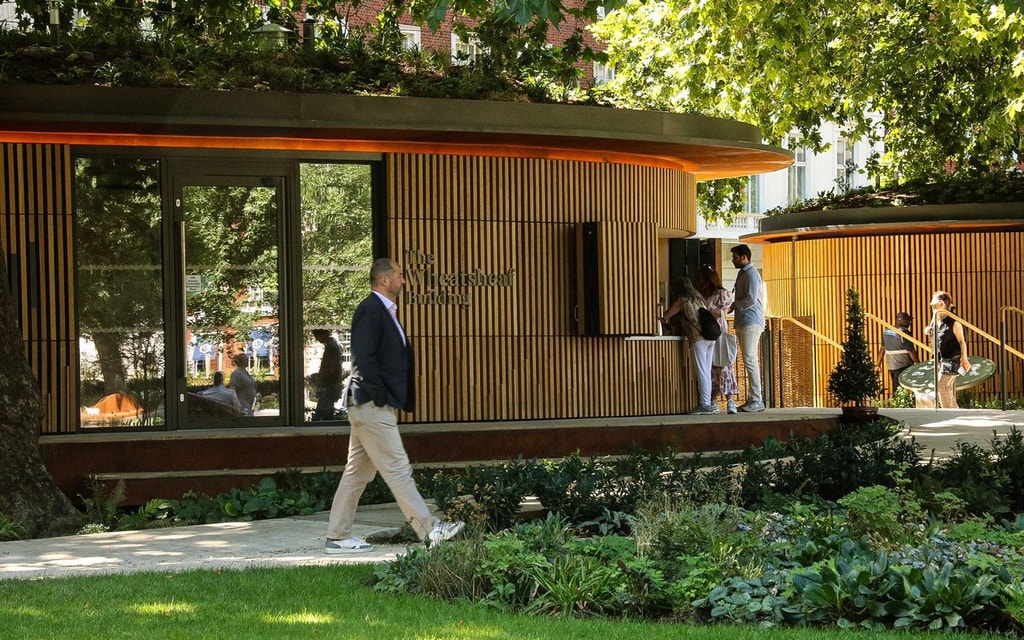
Shaped by more than 7,000 public consultation responses, the redesign introduces a range of new facilities that make the gardens more welcoming, inclusive and enjoyable for everyday use. Two sensitively designed pavilions sit beneath the mature tree canopy, providing a café, an education centre run by the London Wildlife Trust and much-needed public toilets. New accessible entrances and pathways, improved lighting and wayfinding, drinking fountains, social spaces and public art locations, while timber used throughout the buildings, decks, play features and seating has been sourced from Grosvenor’s own estate, creating a local, low-carbon and fully traceable supply chain.
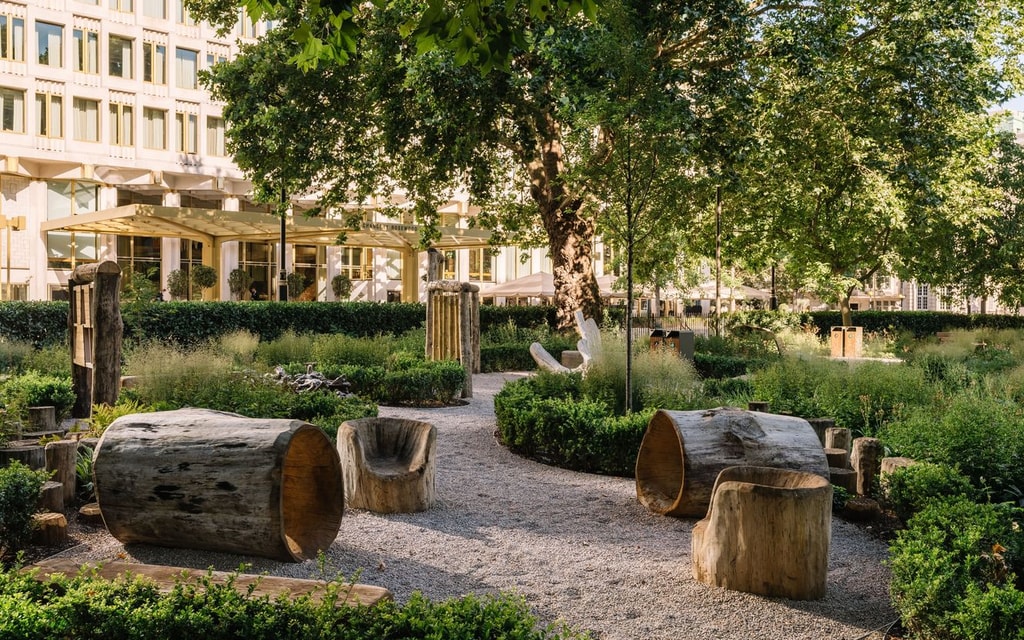
Large areas of conventional lawn have been replaced with diverse planting, woodland and meadow habitats beneath the existing London plane trees. More than 70,000 plants, 80,000 bulbs, 44 new trees and two new wetlands create a landscape that supports wildlife while offering visitors changing colour, texture and seasonal interest throughout the year.
New woodland walks, informal play spaces, education facilities, improved entrances, accessible pathways and more than 350 additional places to sit encourage people to spend longer in the square and engage more closely with nature.
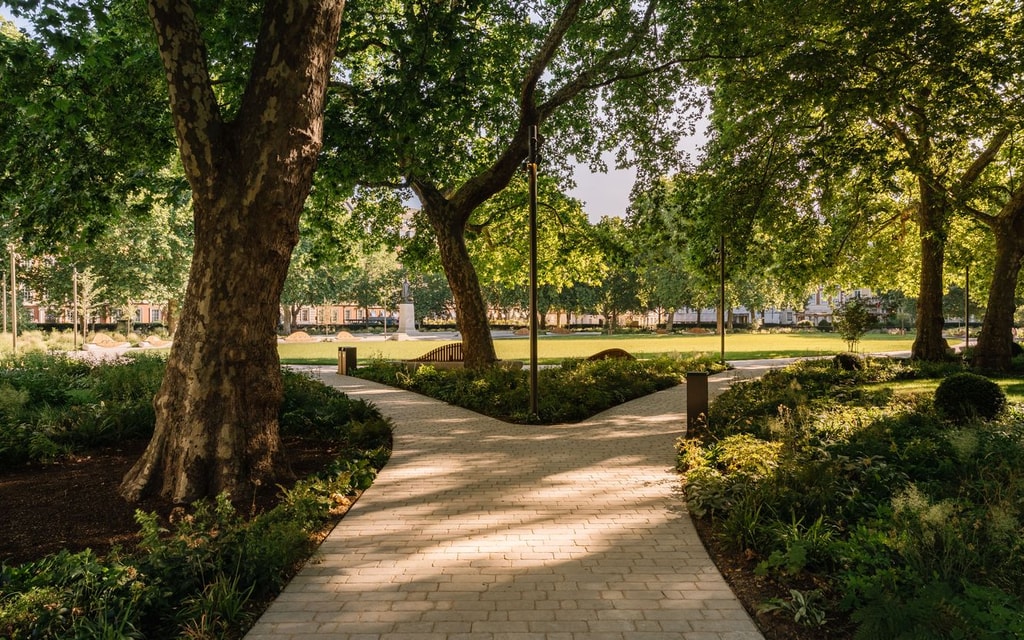
The project also demonstrates how nature-based design can provide practical climate resilience. Rather than relying on conventional engineering solutions, the design integrates nature-based design solutions to allow the landscape to function as a natural living system. Across approximately 15,000 square metres, compacted soil has been restored to improve tree health and allow the ground to absorb up to 1.4 million litres of stormwater during heavy rainfall. Around 30,000 porous terra-vent openings, permeable paving and enhanced soil structure work together to capture the site’s surface water runoff, directly reducing pressure on London’s already strained drainage system. This reduces flood risk, improves biodiversity and lowers long-term maintenance requirements.
The expanded planting and tree canopy will also help reduce the urban heat island effect, improve air quality and create cooler, more comfortable public spaces during increasingly frequent periods of extreme heat.

“Grosvenor Square has always been one of London’s most important public spaces, and this project demonstrates how historic landscapes can evolve to meet the needs of modern cities.
“Our ambition was to restore Grosvenor Square’s historic relationship with nature and create a landscape that encourages people to connect with the natural world in the heart of the city. The result is a greener, healthier and more welcoming public space that benefits both people and the environment.
“More than ever, investment in green infrastructure is about delivering lasting impact. Well-designed landscapes can support biodiversity, improve wellbeing, strengthen climate resilience and help create thriving, prosperous cities for future generations.”
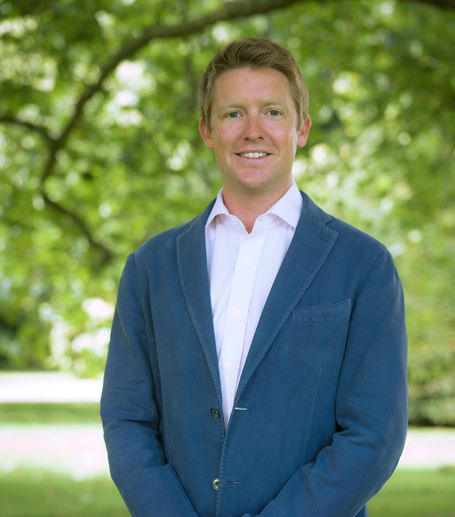
“This transformation is about showing how historic urban spaces can work well for people, nature and the climate. We are grateful to the thousands of people who helped shape the project, including many young people whose ideas influenced the final design. I hope Grosvenor Square becomes a place where everyone can pause, explore and connect with nature in the heart of the city, and where future generations can develop a sense of wonder about the natural world.”

“When we approached the redesign of Grosvenor Square, we challenged ourselves to consider not only what looks good, but also what the city actually needs. The result is a public garden where climate resilience, biodiversity and access are built into every part of the design. It is both a response to the climate challenges cities face today and a gift to the people of London.
“Mayfair is quietly entering a golden age, with Grosvenor Square reinstated as its centrepiece. What you see today, beyond this unique new public space, is a philosophy of long-term stewardship brought vividly to life. It is a space that respects the square’s remarkable history while looking confidently to the future, and one that I hope will bring joy to everyone who visits.”
Professor Nigel Dunnett, whose planting strategy underpins the scheme, passed away shortly before the project's completion. Grosvenor Square stands among his final realised works and reflects his long-held belief that urban landscapes should work equally well for people and nature.
The reopening of one of London's best-known public spaces, shows how historic landscapes can be adapted to meet contemporary environmental challenges while remaining rooted in their history.