How urban spaces can work harder for nature and people
The UK’s urban green spaces are under increasing pressure to deliver more for nature and for communities. For centuries they’ve provided relief from the intensity of city life. Today, that pressure is growing, alongside the climate crisis, biodiversity loss and the demands of an increasingly urban population.

-1330x831.jpg?u=2026-09-03T10:15:41.819Z&w=1024&q=90)
We are experiencing hotter, longer summers. Access to nature has never been more important for mental health and wellbeing. Yet many of our parks and gardens still follow a model rooted in display, not function. Spaces to look at rather than live in.
We need a new model. One that acknowledges our changing needs. One that invites us in. And one that, critically, works harder, ecologically, socially and technically.
Grosvenor Square in Mayfair is proving what that might look like. This iconic, Grade II-listed garden has stood at the heart of the West End for nearly 300 years. Originally inspired by Michelangelo’s Capitoline Hill, its carefully ordered design offered a dose of greening and calm in the city. Envisaged as a ‘Wilderness Worke’, it was always intended as a place to stroll, to decompress, to reconnect. That instinct hasn’t changed, but everything around it has.
The current transformation of Grosvenor Square represents one of the most significant private investments in public green space in a generation. The ambition is clear: to create an extraordinary urban garden that showcases how historical sensitivity and future resilience can coexist. This is a fundamental rethink of how a city garden should function in the 21st century.
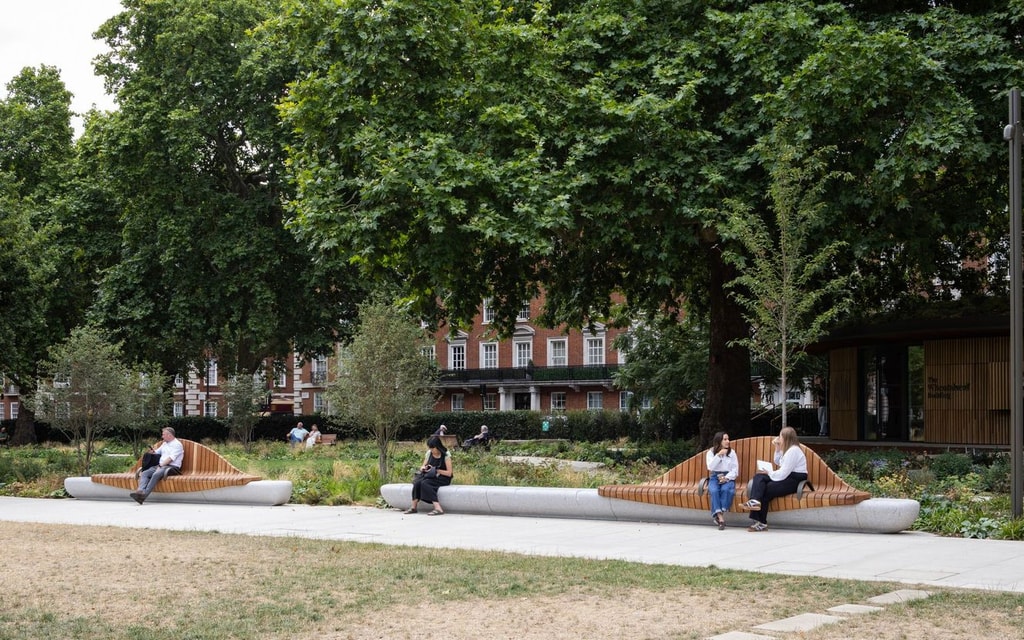
That begins with the people who use it. More than 7,000 individuals shared their views during consultation. What came back wasn’t surprising. Better access, more seating, water fountains, toilets, improved lighting and safety. The basics of dignity, usability and comfort. But too often they’re overlooked. The new design responds in kind, creating a distinctive hierarchy of paths that connects all the entrances and links each of the memorials at the heart of the square. Paths are wider. Entrances are open and visible. Recessed areas give room for wheelchairs and buggies. And seating comes in a greater variety of styles and heights, built to accommodate all ages and abilities.
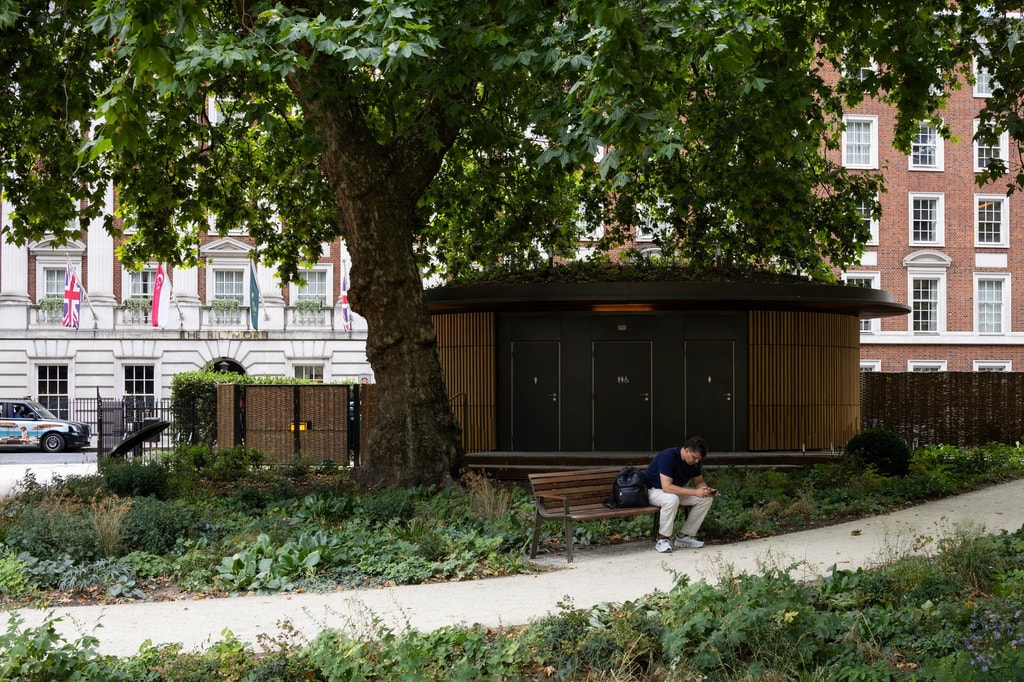
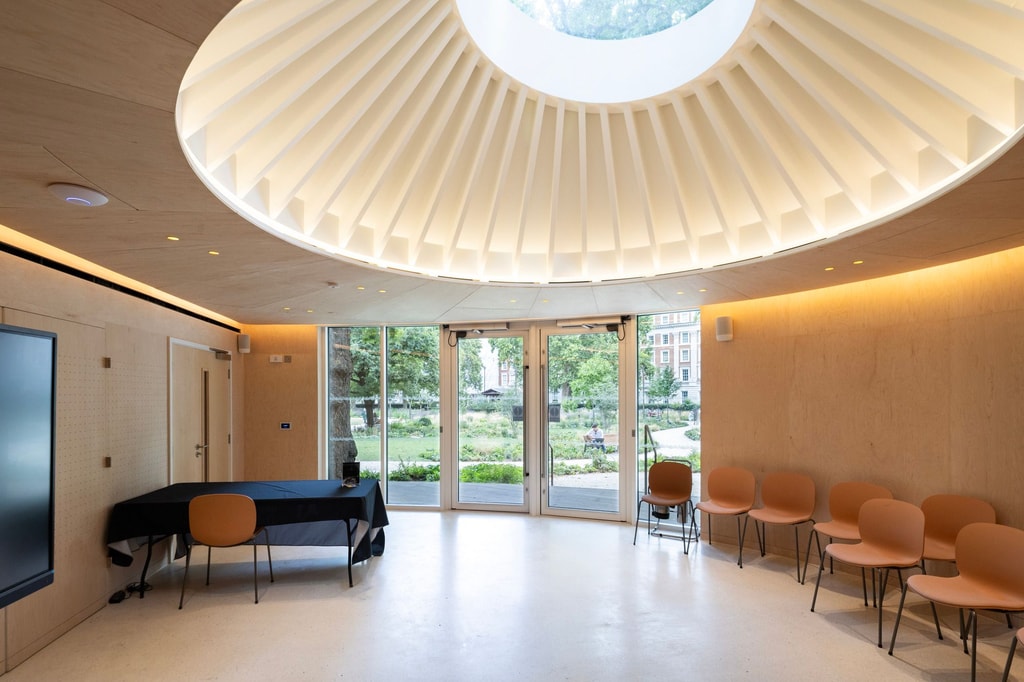
The design is about creating spaces people want to stay in. Central open lawns have been retained for sunseekers, social groups and exercise. Smaller ‘social ovals’ are tucked into planting zones for more intimate gatherings. Woodland trails wind through the shade of mature trees. A pair of new pavilions provide education space, toilets and year-round shelter. And throughout, visibility has been deliberately protected; low planting corridors ensure natural surveillance, while lighting and discreet CCTV provide reassurance without compromising the calm.
-1330x831.jpg?u=2026-09-03T10:32:04.866Z&w=1024&q=90)
But spaces like these must also work for nature. For too long, urban parks have seen nature as a decorative maintenance burden. In Grosvenor Square, nature is reasserted. Less than 1% of the square was previously planted. That figure will rise to 44% under the new scheme, with more than 70,000 new plants and 80,000 bulbs introduced. These aren’t show garden flourishes, they’re structured plant communities, layered for seasonal change, designed to create distinct character zones that evolve throughout the year. Visitors will see the full cycle of life; emergence, decay and renewal. In a city obsessed with speed and spectacle, this slower natural rhythm matters.
A new wetland pond introduces a contemplative setting and adds vital biodiversity. The entire square will act as a giant sponge, absorbing up to 1.4 million litres of rainwater and eliminating the need for gullies. This kind of sustainable urban drainage is essential for climate resilience. The ground itself will be decompacted and treated with biochar to support healthier soil, restore nutrients and promote natural life underground. Meanwhile, deadwood from removed trees is reused across the site, either as habitat or part of a nature-led play strategy.
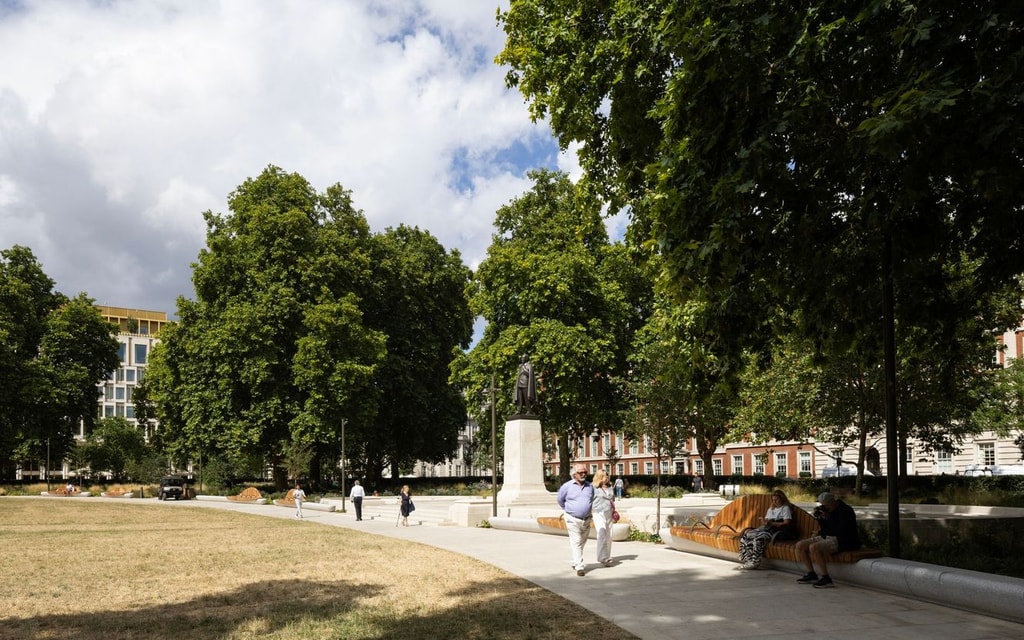
Delivering all of this in such a sensitive setting is no small task. The square’s many mature trees and historic monuments had to be preserved, and in many cases protected from construction activity altogether. We adopted a ‘no-dig’ approach wherever possible, removing damaging foundations and replacing them with low-impact interventions. New paths sit on raised grids to avoid root damage. Planting in root zones is done in a shallow layer of new topsoil, sized to avoid disturbance. Even the pavilion foundation locations were developed following vacuum-excavated soil and 3D root mapping to carefully thread screw-piles between the existing trees.
There’s also a strong cultural layer to this work. Grosvenor Square is a place of memory. The Roosevelt Memorial, the Eagle Squadrons Monument and the 9/11 Memorial all sit within the square’s layout. The design respects that, retaining and enhancing the settings around each, and making them more accessible to all. Where intervention has been needed, it’s been informed by careful archival research and dialogue with conservation organisations such as Historic England and the Twentieth Century Society.
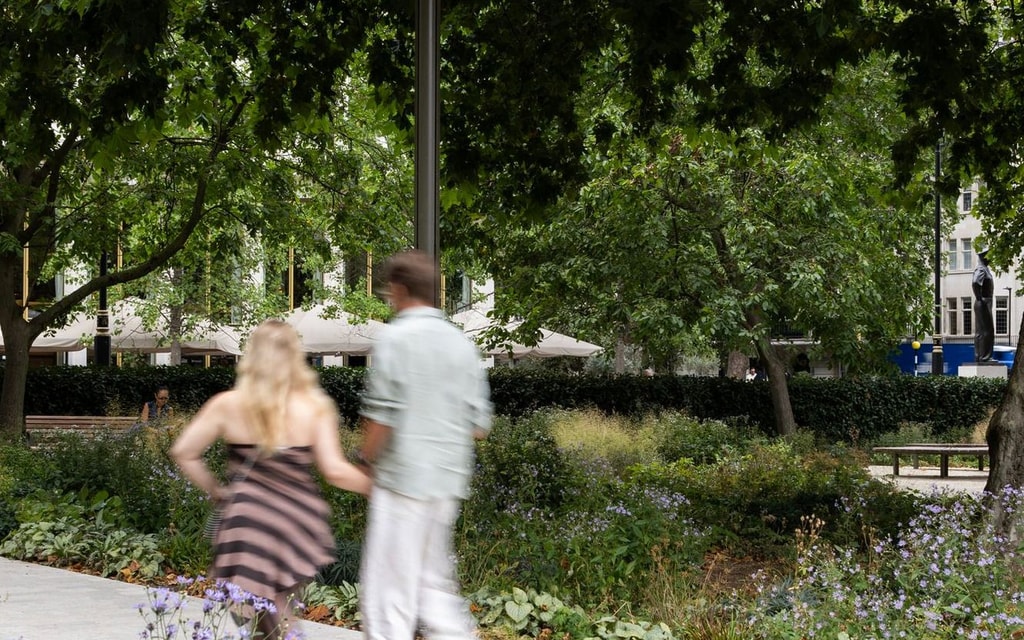
The result is a hard-working landscape, shaped by ecology, conceived with empathy and informed by technical engineering. Grosvenor Square sets a new benchmark for how green space in cities should function, for beauty and biodiversity and as a climate infrastructure, social infrastructure, and a cultural touchstone. The design is richer because it listens, stronger because it respects what’s already there, and more enduring because it prepares for what lies ahead.
If we want our cities to remain liveable, our green spaces must continue to evolve. And that evolution must be thoughtful, layered, and quietly radical. Grosvenor Square shows that it can be done and that nature, people, culture and heritage can all be the beneficiaries.