The Women of Senior Living
Senior living is often framed as a response to demographics, healthcare needs and aging populations. Those forces matter, but they don’t tell the whole story.


We have experienced this transition personally, having each guided our own parents from independent living into retirement care. As architects and designers, that experience changed the way we think about senior living, revealing something that statistics can’t alone.
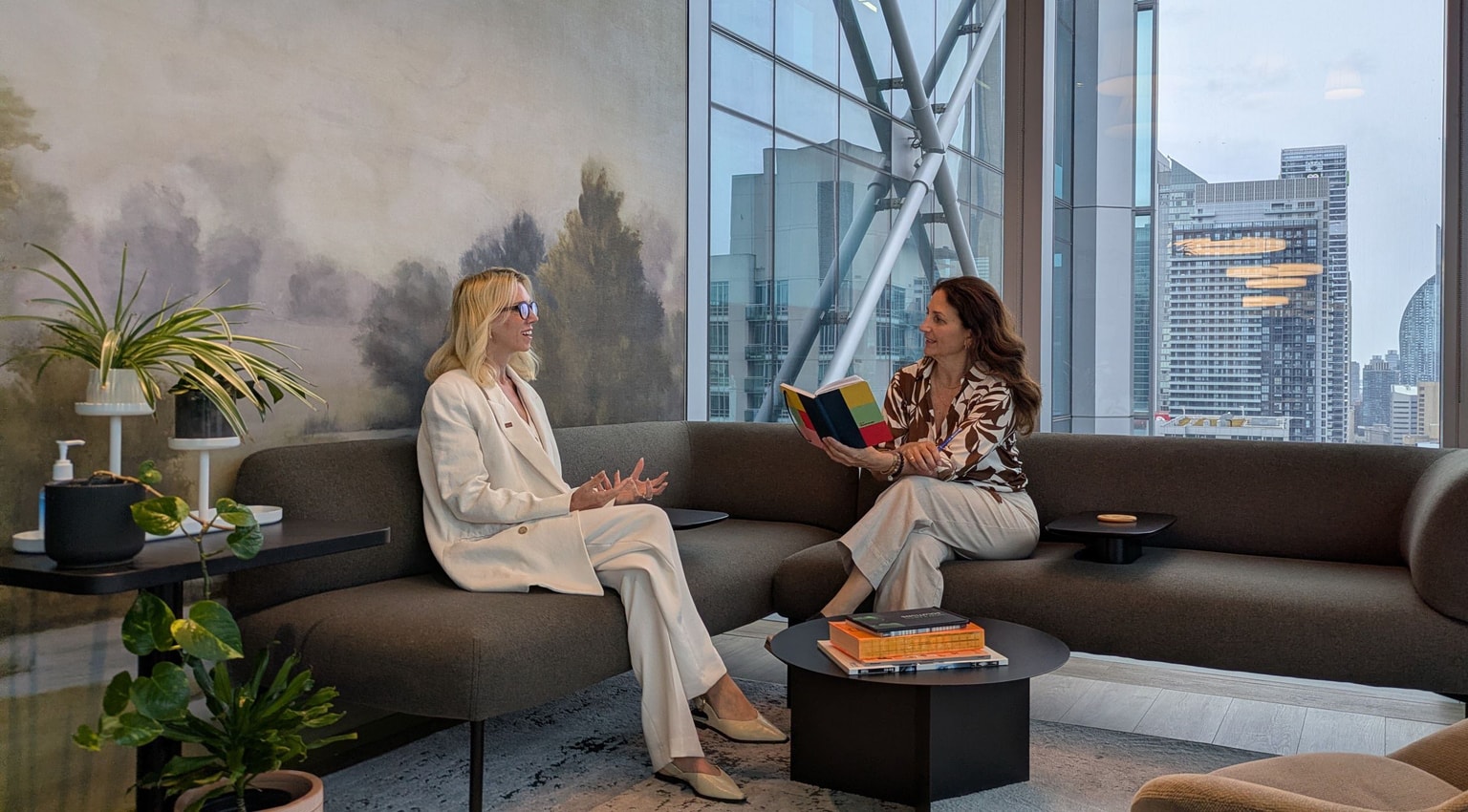
Andrea Katz and Michelle Xuereb reflect on senior living through the dual lens of architects and daughters.
Broadly speaking, senior living is, overwhelmingly, a women-led experience. Women make up the majority of residents. Women are the daughters, spouses and family members researching options, touring residences, asking difficult questions and carrying the emotional weight of deciding when “it’s time.” Women also make up much of the care workforce, sustaining the daily life of these communities through skilled, intimate and emotionally demanding work.
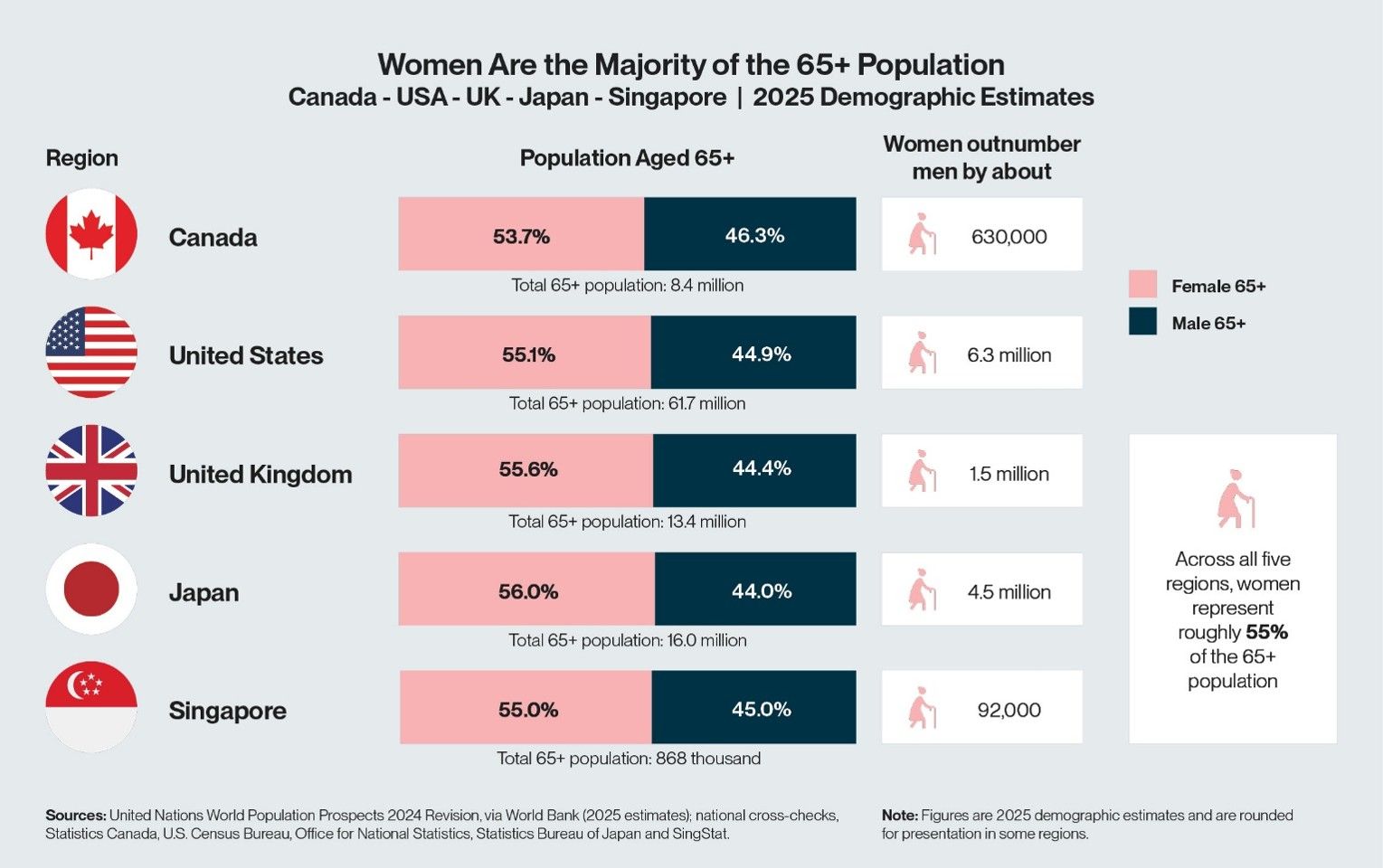
Across five regions, women consistently make up the majority of the population aged 65 and older. In 2025, women represented approximately 54% of older adults in Canada and about 55% - 56% in the United States, United Kingdom, Japan and Singapore. The imbalance becomes considerably more pronounced among those aged 80 and older. Women account for approximately 63% of the 80+ population in Canada, the United States, the United Kingdom and Singapore and more than 64% in Japan. Put differently, nearly two out of every three people aged 80 and older across these markets are women.
Yet there’s an interesting disconnect. Senior living is a significant and growing real estate asset class and many of the investment, development and design decisions that shape it are still made primarily by men. That’s not a criticism, it’s an opportunity to broaden the conversation by placing the lived experiences of the women who ultimately choose, experience and sustain these communities at the centre of the design process. If we want to design better environments for aging, we need to design for this reality.
Senior living is an emotional ecosystem shaped predominantly by female residents, daughters and women caregivers. The decisions are practical, but they are also deeply personal and layered with love, guilt, responsibility, fear and hope.
For many families, one of the most influential people in that ecosystem is the daughter. Sometimes called the “doting daughter,” she is often the advocate, researcher, coordinator and emotional interpreter. Not only is she comparing floor plans, care levels and amenity lists, she is trying to answer a more difficult set of questions: Will my parent be safe here? Will they be treated with dignity? Will they feel lonely? Will they still feel like themselves? Will I feel reassured when I leave?
These questions reveal what families are truly looking for. They should be central to both the experience of senior living and to how we design it.
A women-led design approach begins by taking these emotional realities seriously. It recognizes that trust is built through more than operations and care plans. It’s built through atmosphere, visibility, warmth, dignity and ease. And it’s built when a daughter can walk into a residence and feel, almost immediately, that her parent will be known, supported and respected. Design can’t remove the emotional burden of care, but it can help ease it. It can create spaces that feel welcoming rather than institutional and bring natural light into daily routines. It can offer comfortable places for families to visit without feeling in the way and provide quiet corners for privacy, generous common areas for connection and clear circulation that reduces stress for residents, visitors and staff. It can make care feel present without making it feel clinical.
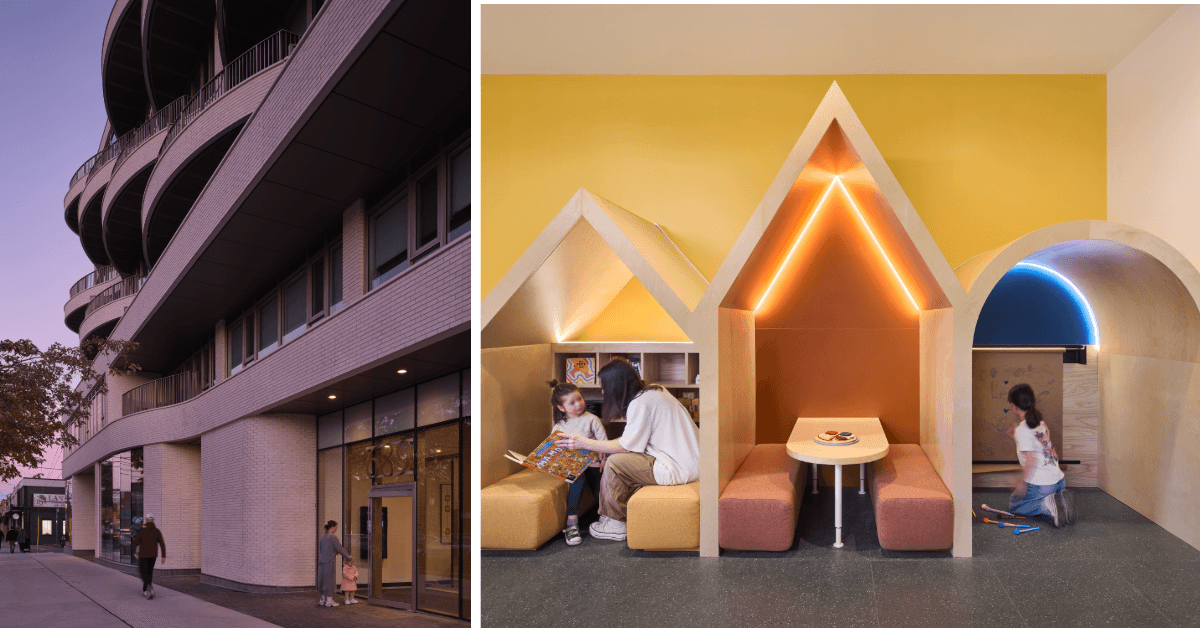
Designed by BDP Quadrangle as part of an all-women-led consultant and development team, Reina demonstrates how a women-led design approach can shape inclusive, family-focused housing. Its welcoming interiors, human-scaled architecture and community-oriented spaces prioritize comfort, dignity, connection and belonging - qualities that remain essential at every stage of life.
For many families, these decisions are also accompanied by profound guilt. Even when additional care is clearly needed, the transition can feel like a personal failure rather than a practical necessity. Those women seeking care for their parents may be balancing careers, children and caregiving responsibilities while navigating a difficult role reversal: the people who once cared for us now depend on us to make decisions on their behalf. Design can’t remove that emotional weight, but it can help families feel that care is a continuation of life rather than a rupture from it.
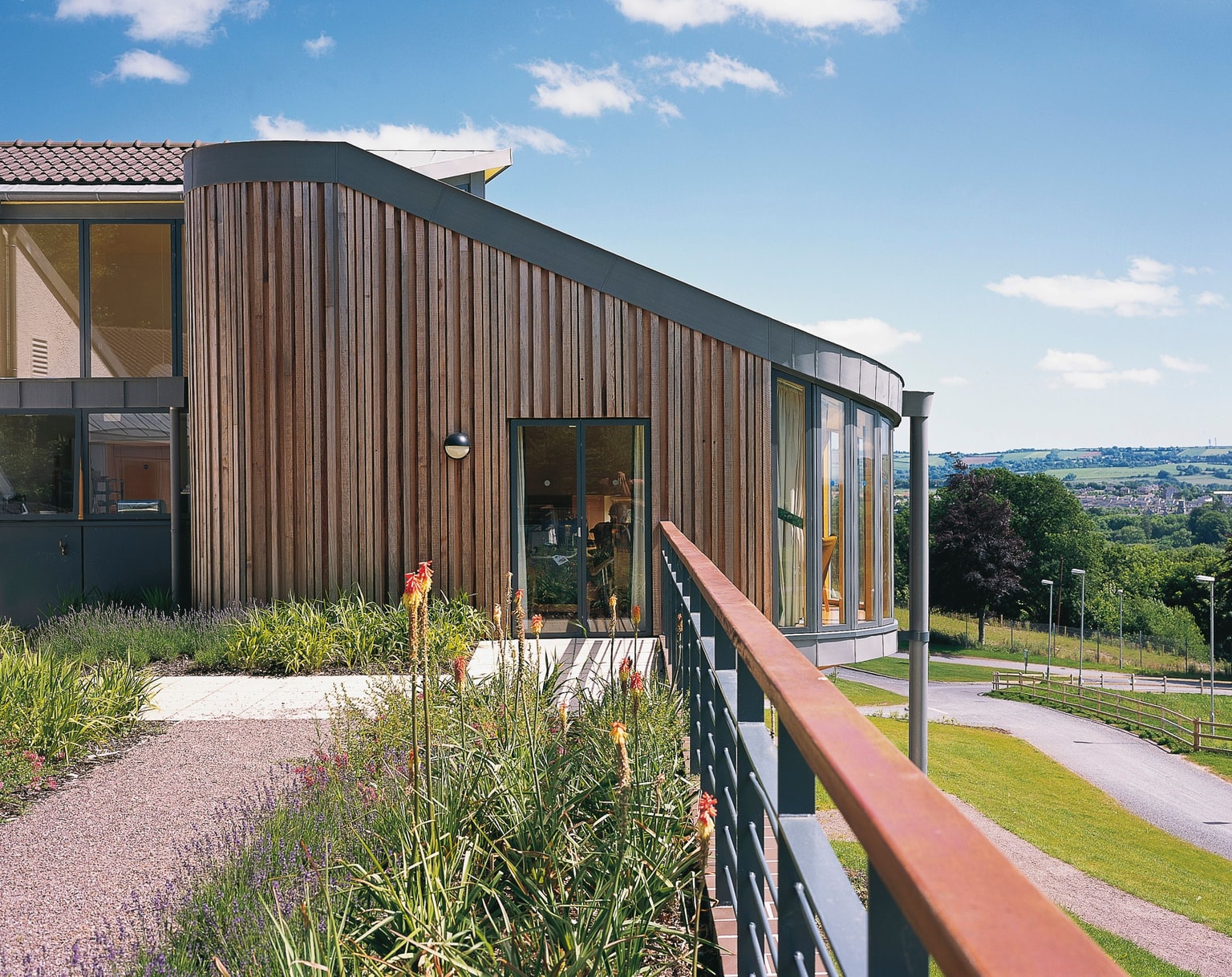
Bon Secours Care Village, designed by BDP, offers a model for senior living rooted in comfort, dignity, daylight and connection to nature.
That sense of continuity extends beyond the walls of the residence. Senior living should be considered as part of a complete community. Access to parks, cafés, shops, services, cultural life and familiar streets can be as meaningful as the amenities inside. When senior living is integrated into a walkable neighbourhood, older adults can maintain routines, independence and a sense of belonging rather than feeling separated from everyday urban life.
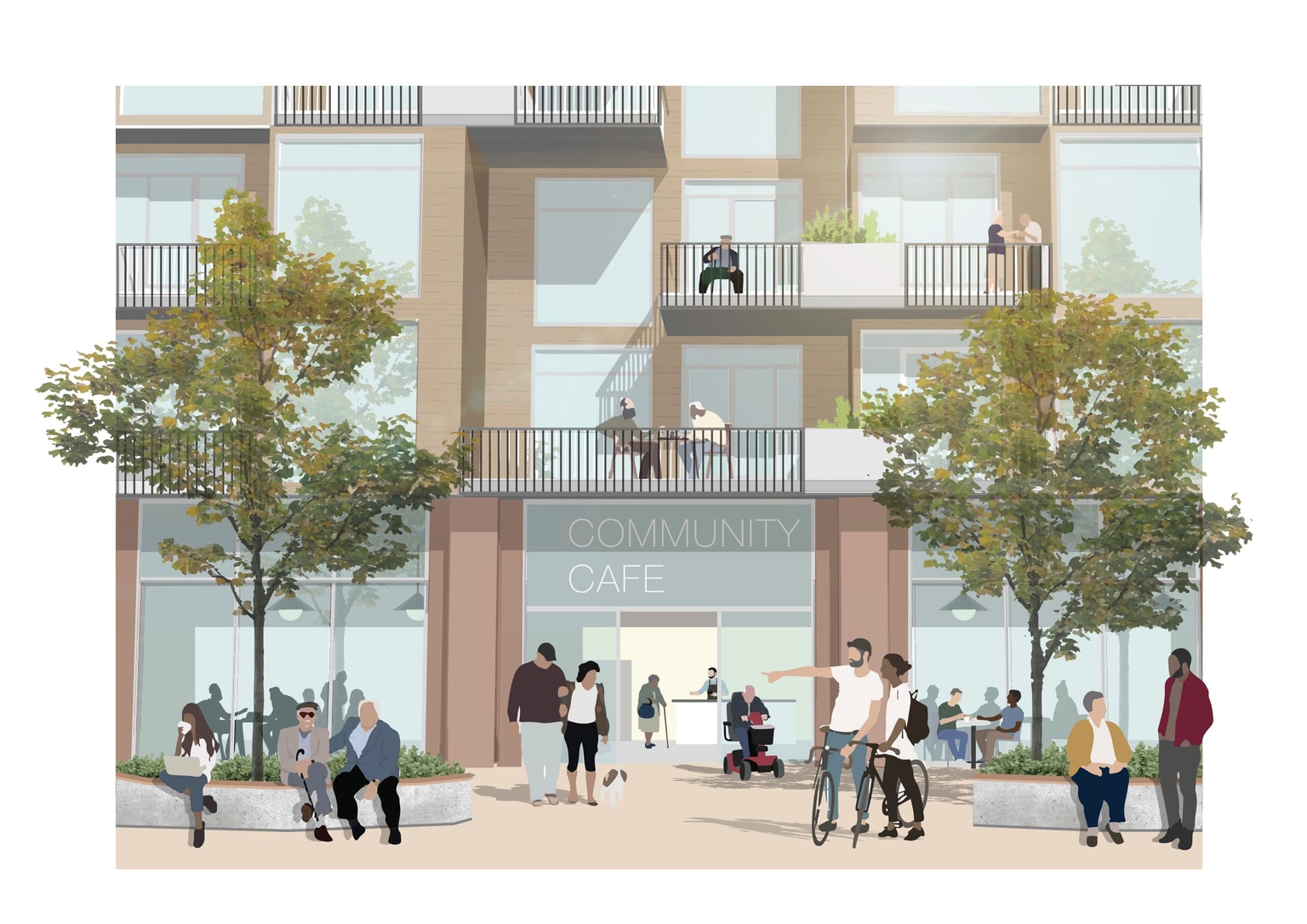
Our Age-Friendly Living concept study imagines senior housing as part of an active, welcoming community where residents, families and neighbours can gather, pause and stay connected to everyday urban life.
For residents, many of whom are women, this matters deeply. Aging should not mean the loss of identity, beauty, independence or personal rhythm and a senior living community should not reduce a person to their care needs, alone. It should support the continuation of a full life: friendships, rituals, privacy, choice, pleasure and belonging.
This is especially important for the incoming generation of Baby Boomers, who don’t necessarily see aging as a reason to withdraw from everyday life. They are design-aware, independent and self-defining and they are looking for places that support autonomy, purpose and participation. These should be homes people choose because they offer connection and quality of life.
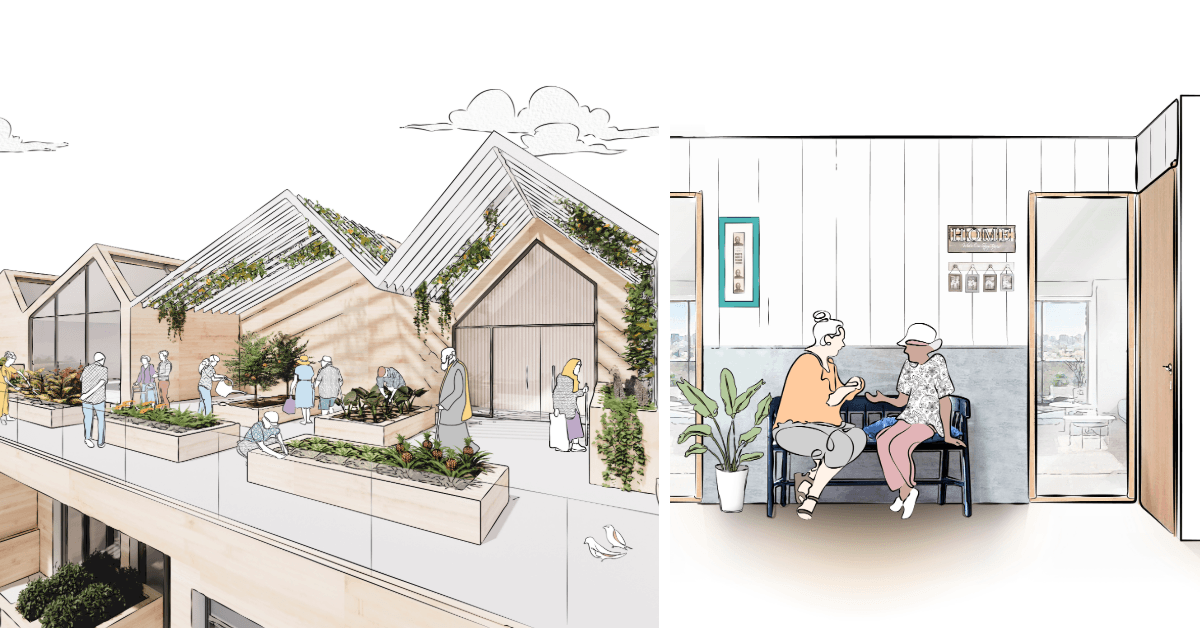
Our Age-Friendly Living concept study explores how shared gardens, familiar domestic thresholds and informal places to pause can support independence, connection and a continued sense of home.
For caregivers, many of whom are also women, design matters just as much. Personal support workers, nurses and care staff carry enormous emotional and physical responsibility. Their experience directly affects resident well-being and family confidence. If we want better outcomes for residents, we need to design for the people who care for them.
That means designing spaces that support workflow, reduce strain and acknowledge the emotional labour of care. Where can staff pause after a difficult interaction? Where can they step away, reset or have a private conversation? How can back-of-house planning, staff areas and daily circulation be treated not as afterthoughts, but as essential infrastructure for care?
Designing for caregivers isn’t separate from designing for residents; the two are inseparable. This is the opportunity in women-led design: it asks us to see senior living through the people who most often experience it, choose it, question it and maintain it. The resident who wants to remain herself, the daughter trying to make a loving but difficult decision or the caregiver holding the daily life of the community together.
When we design from that perspective, we move beyond the idea of senior living as a facility. We create communities that feel humane, dignified and trustworthy, places where care is present but not overwhelming, where residents can continue to feel known and independent and where daughters, sons, grandchildren, friends and caregivers can remain part of daily life. Families can feel reassured and visits can be shaped by connection rather than logistics, stress or a sense of loss.
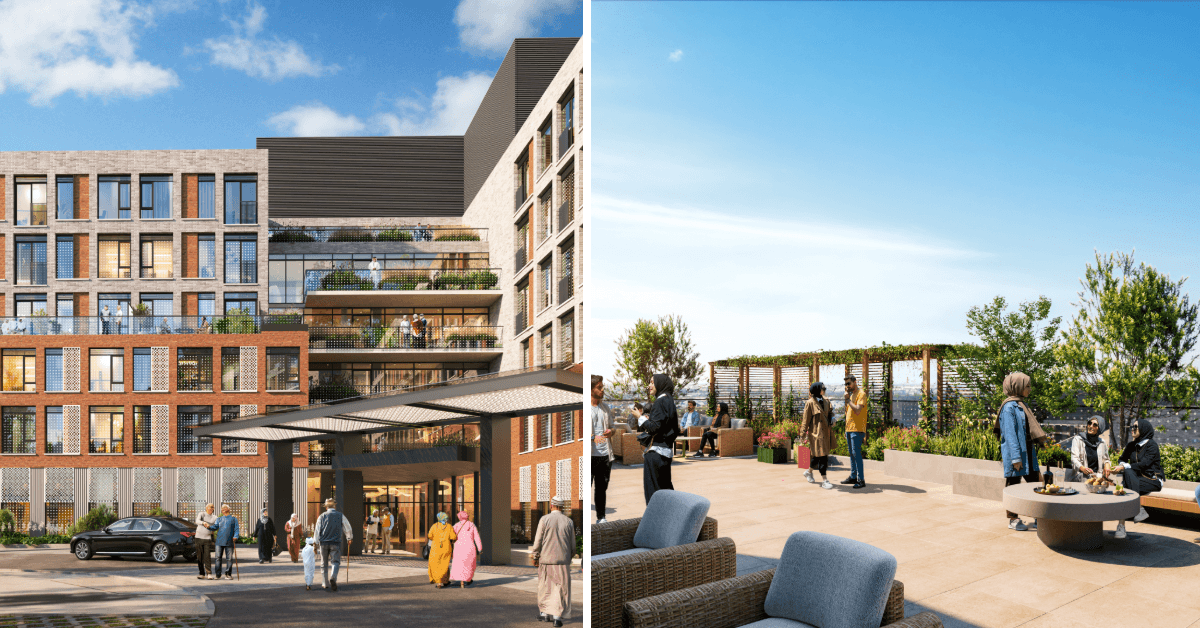
Designed by BDP Quadrangle, 9000 Bathurst Street in Toronto, Canada demonstrates how senior-focused housing can support aging in place while strengthening cultural continuity, intergenerational connection and a continued sense of belonging within an established community.
The future of senior living won’t be defined by demographics alone. It will be defined by how well we understand the human experience of aging and care. As designers and as daughters who have lived this experience ourselves, we believe the strongest communities emerge when those lived experiences help shape the decisions behind them.
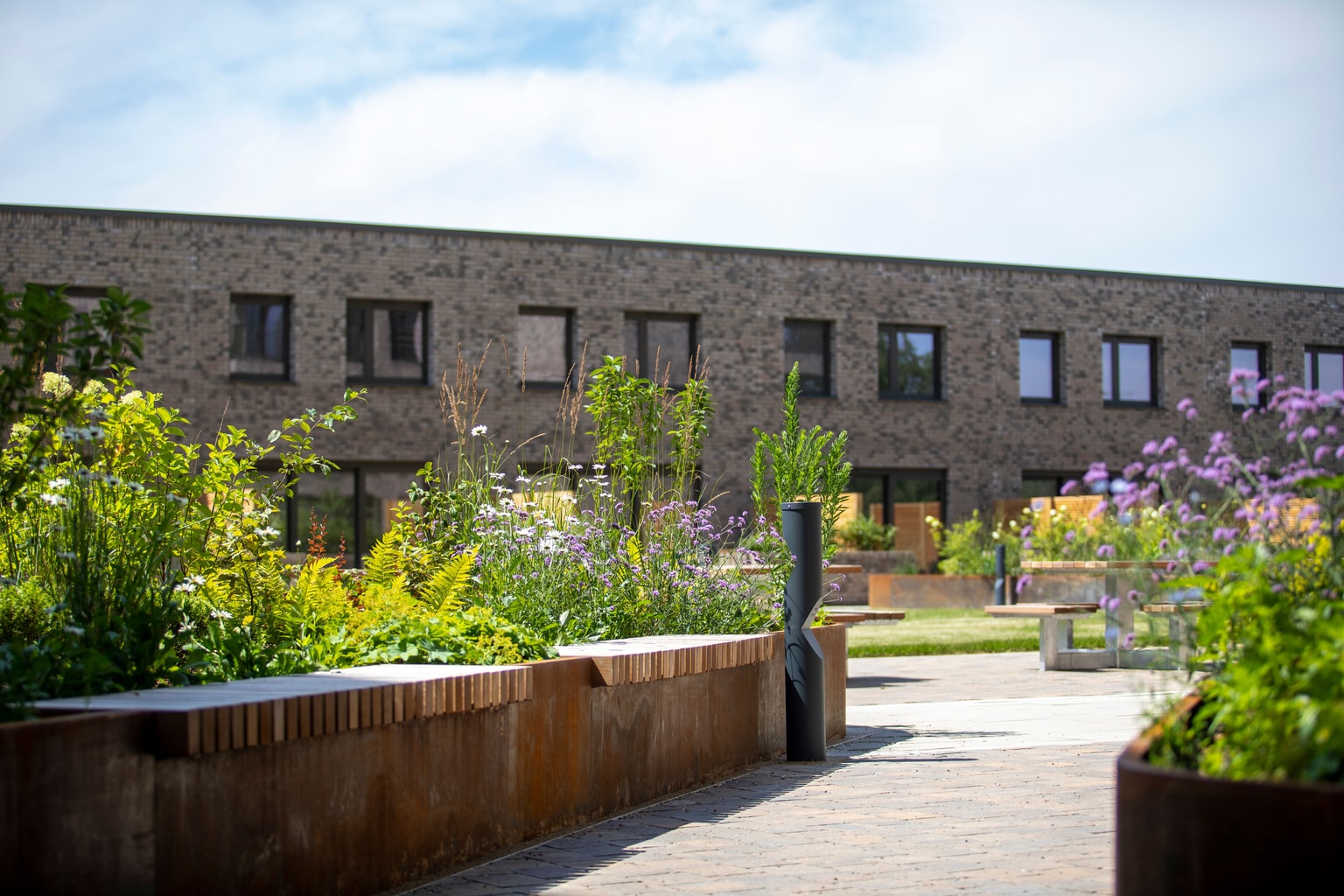
At Canalside in Woking, UK, designed by BDP, landscaped gardens and walkable, public spaces create a calm and welcoming setting where older adults can remain connected to nature, neighbours and daily community life.
Much of that experience is led by women, so if we design with that in mind, we can create senior living communities that offer more than safety and efficiency. We can create places that are emotionally intelligent, compassionate and deeply attuned to the people who live, choose and sustain them. Communities where people can age with dignity, families can find reassurance and care feels less like a severance and more like a continuation of life.