Ideas above the station
The Government’s latest planning reforms contain a deceptively simple proposition. If a place is well connected by rail, we should make it easier to build homes there

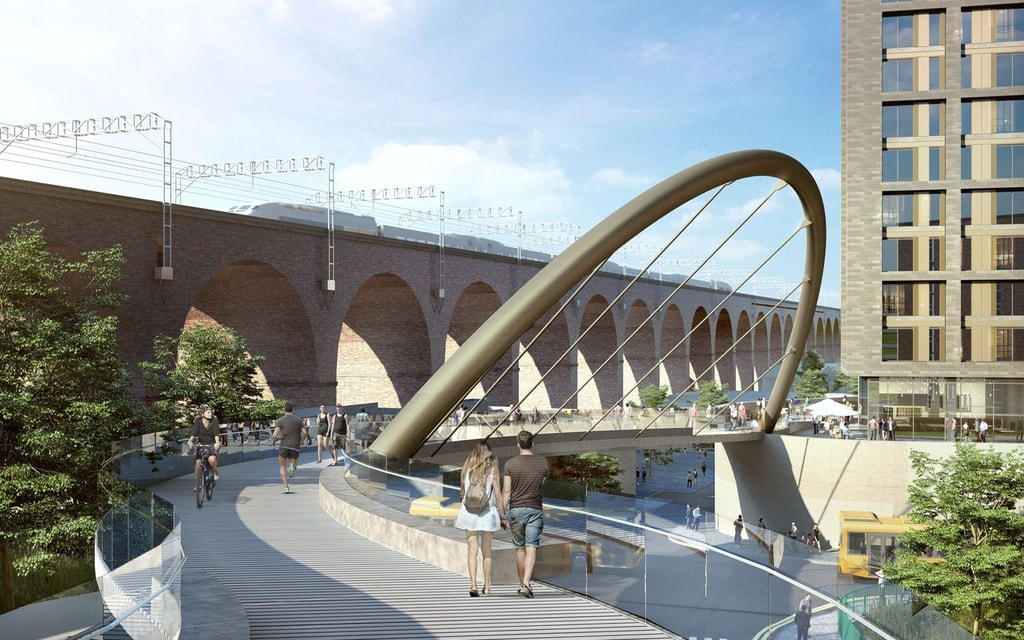
Planning Policy Framework published on 17 August 2026 gives this proposition considerably greater weight, with stronger support for suitable housing and mixed use development around well-connected railway stations.
The NPPF introduces minimum density expectations, development within reasonable walking distance of a well-connected station should achieve at least 35 dwellings per hectare (dph) within the net developable area, rising to 45 dph where the station is “very well connected”. These are minimums rather than optimum densities, intended to encourage higher densities where connectivity and the characteristics of the location support them. The policy also creates opportunities around stations outside existing settlements, including in some Green Belt locations.
The rationale is compelling. But there is a danger that we focus too much on the station and not enough on the place.
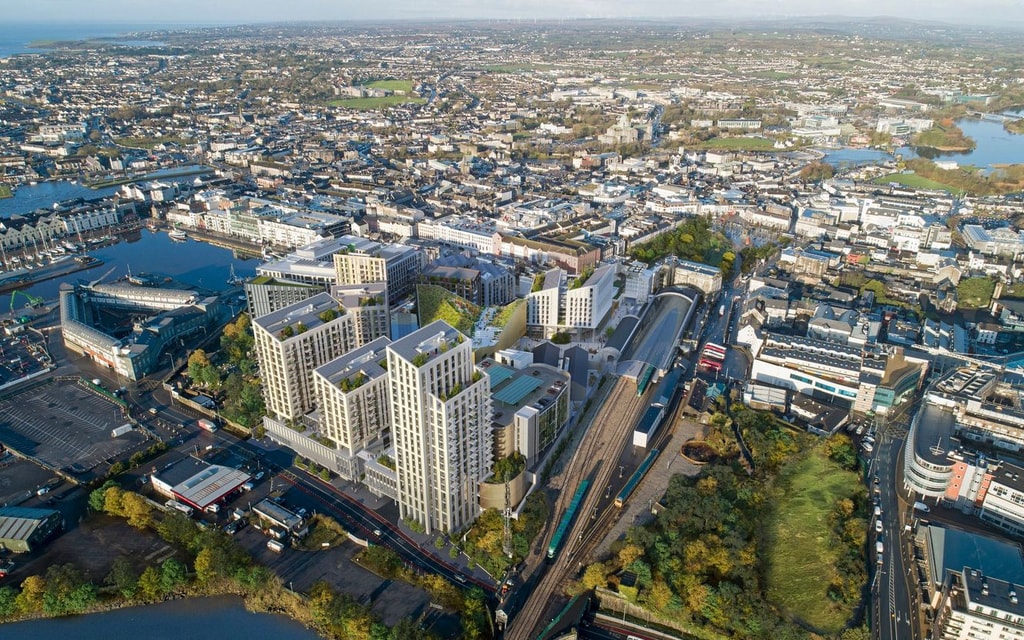
A railway station is not a planning strategy. Some stations sit at the heart of thriving centres. Others are surrounded by car parks, industrial land or open countryside. Some are well connected in transport terms but poorly connected to the communities around them, or lack the schools, healthcare, shops and public spaces needed to support growth. Some are in cities, others in towns and some in villages.
Treating all these places as equivalent simply because they have a station would be a mistake. The real opportunity is to build better places because of stations, not just near them.
Breaking the car-led development cycle
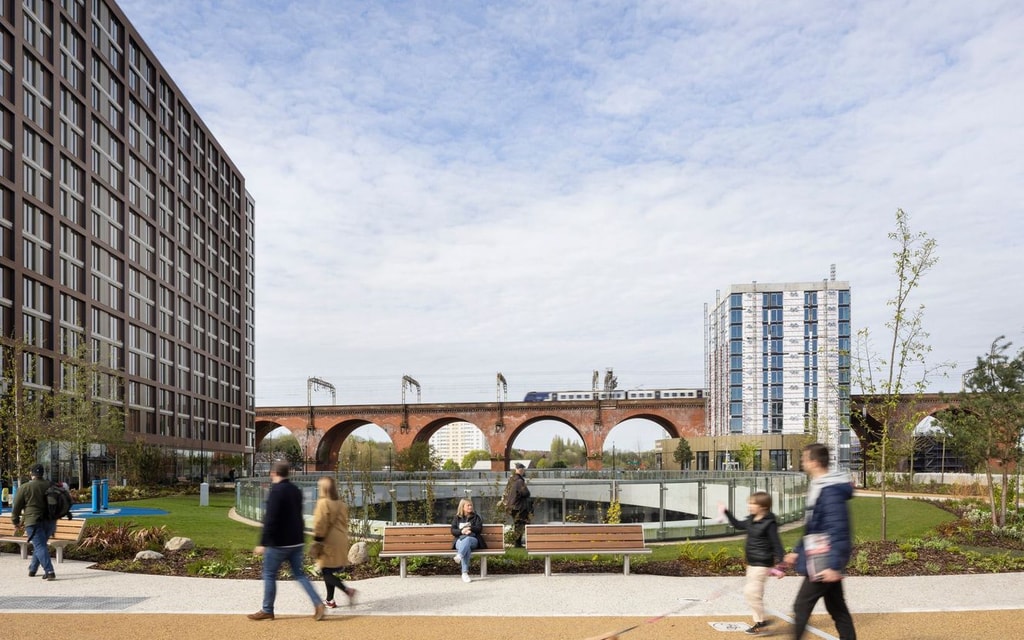
For decades, Britain has often planned housing and transport in the wrong order. We build housing on relatively cheap land, frequently on the edge of settlements. Roads are then required to connect it. Services follow later, if they follow at all. Residents become dependent on cars because the development was designed around the assumption that they would drive.
The station policy turns that logic on its head. Start with the transport network. Identify where there is genuine capacity and connectivity. Then ask how much development those locations can sustainably accommodate.
Environmentally, the carbon emissions reduction benefits are clear but socially, this is about giving people choice. A well-designed station neighbourhood can allow a household to live without two cars, enable a young person to get to work without driving and give an older resident access to shops and services without relying on someone else for a lift.
The NPPF is also right to recognise that better-connected locations can support higher densities. But density is not a design in itself. A development of 45 dph could be a collection of mediocre apartment blocks with poor public realm, while a substantially higher-density development could create an attractive, mixed-use neighbourhood with excellent streets and public spaces.
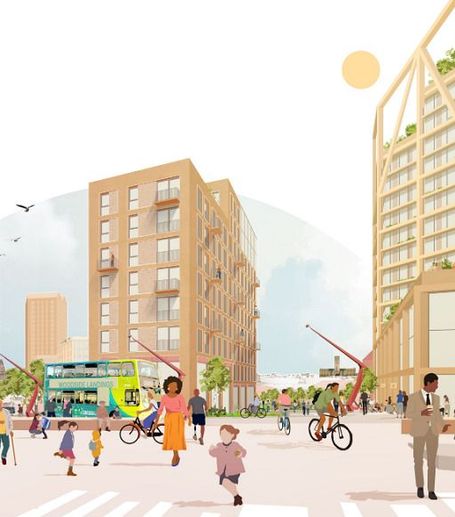
The focus shouldn’t be just on volume. We should ask: ‘What is the right amount and form of development to create a successful station neighbourhood?’
Density should be a means to an end, not the end itself.
What happens between the station and the homes?
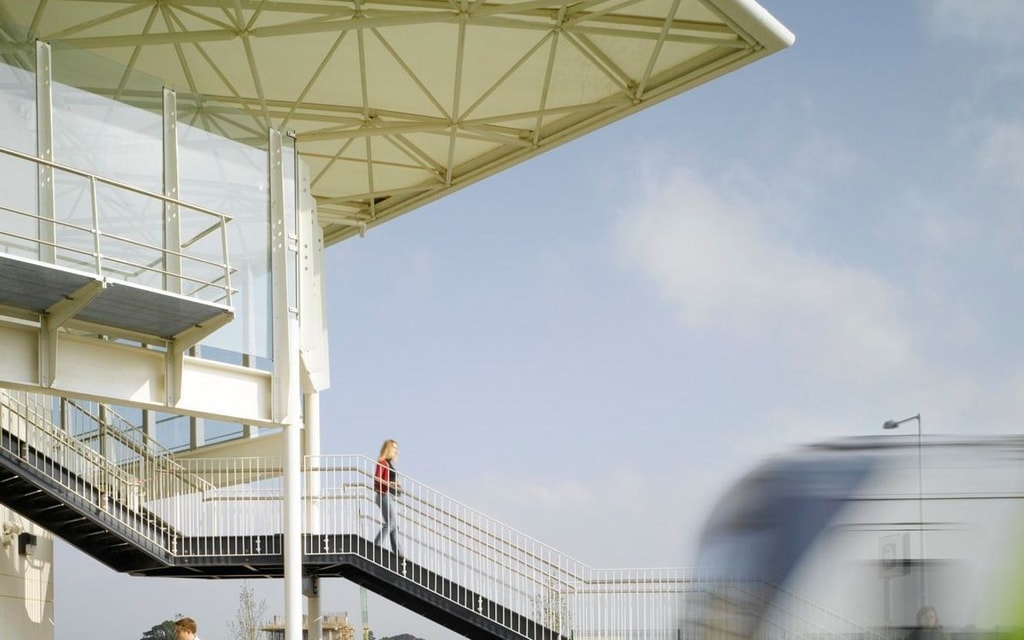
If we are going to put thousands of additional people around stations, we need to think seriously about the routes they will take to get there. Can you walk or cycle safely? Can you cross the road easily? Are there shops and cafés on the way? Is the station welcoming and accessible? Can someone with a buggy, wheelchair or heavy shopping get home without encountering a succession of barriers?
The NPPF’s concept of ‘reasonable walking distance’ is important. Walking distance is about the actual journey, the quality of the route, topography, crossings, barriers and the experience of getting from the station to the homes and facilities. The station, the streets around it and the new development need to be planned as one system.
Is the Green Belt an opportunity or a shortcut?
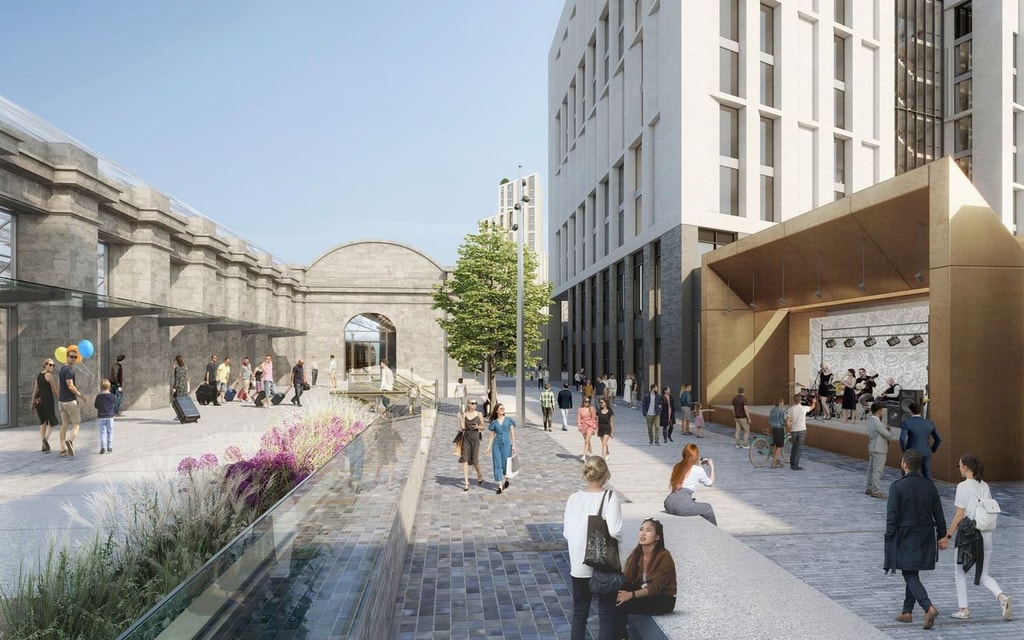
Development ‘near a station’ should not become shorthand for ‘anything within walking distance of a railway platform’.
Green Belt land varies enormously in environmental, landscape and recreational value. Connectivity is an important planning consideration, but it does not remove the need to consider landscape, heritage, biodiversity, flood risk, infrastructure capacity, settlement character or the fundamental role the Green Belt plays in shaping and protecting our settlements.
There is also a wider question about the value of the land itself. Land around stations may present a development opportunity, but it may also support food production, contribute to landscape character and biodiversity, or play an important role in climate resilience.
The challenge is to identify well-connected land, but to also understand the value it already provides and whether development can deliver a better overall outcome.
Infrastructure must come with growth
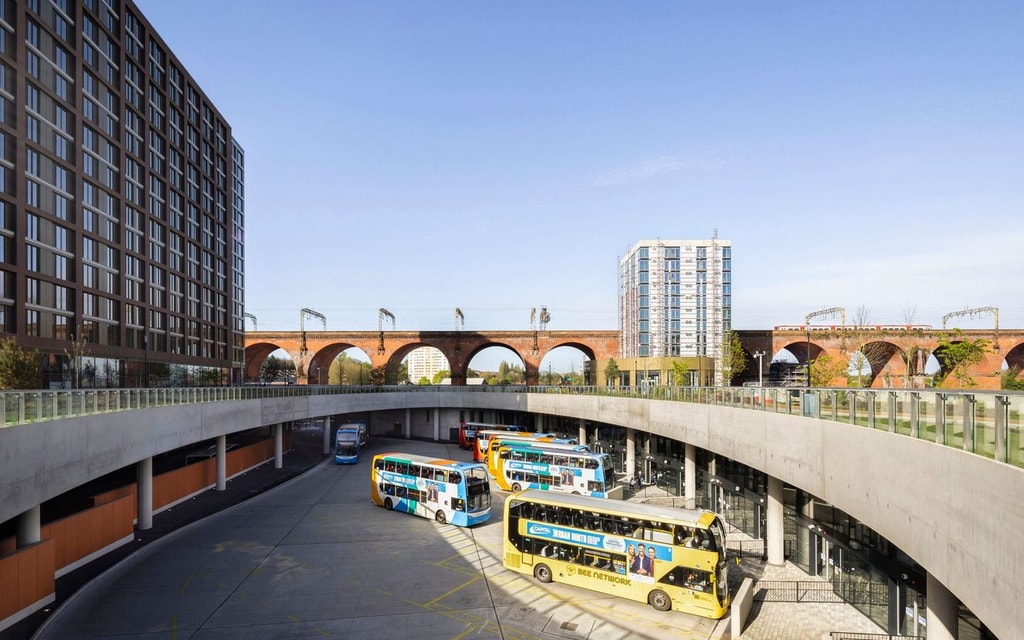
If station-led development is to work, transport investment and housing growth need to be planned together. That means considering rail and station capacity, bus connections, walking and cycling, schools, healthcare, drainage, utilities and public open space alongside the number of homes.
Otherwise, we risk repeating one of the criticisms of decades of housing development that the houses arrived, but the infrastructure didn’t.
A station may have a frequent service, but if trains are already overcrowded, interchange is poor, surrounding streets are hostile to pedestrians and cyclists, or capacity is constrained elsewhere on the network, including at the mainline terminus, theoretical connectivity may not translate into a genuinely sustainable neighbourhood.
From transport-led housing to transport-led place-making:
What is interesting about the new station policy is both the prospect of more homes around railway stations and the possibility that planning is rediscovering a principle that was once fundamental to urban development: that transport infrastructure and settlement growth should be planned together.
The great railway towns and suburbs of the nineteenth and early twentieth centuries were not accidental. Railways created opportunities for new patterns of urban development.
Today, we have an extraordinary existing rail network, yet in many places the land around it remains underused. The Government’s ambition to focus growth where public transport connectivity is strongest is therefore a welcome one. The risk, however, is that this becomes too formulaic. Identify a station, measure its connectivity, apply a minimum density and assume that more homes must follow.
Connectivity may be the starting point, but it cannot be the whole test. The test should be much more ambitious. It should be whether, in ten or twenty years, these developments have created better places to live.
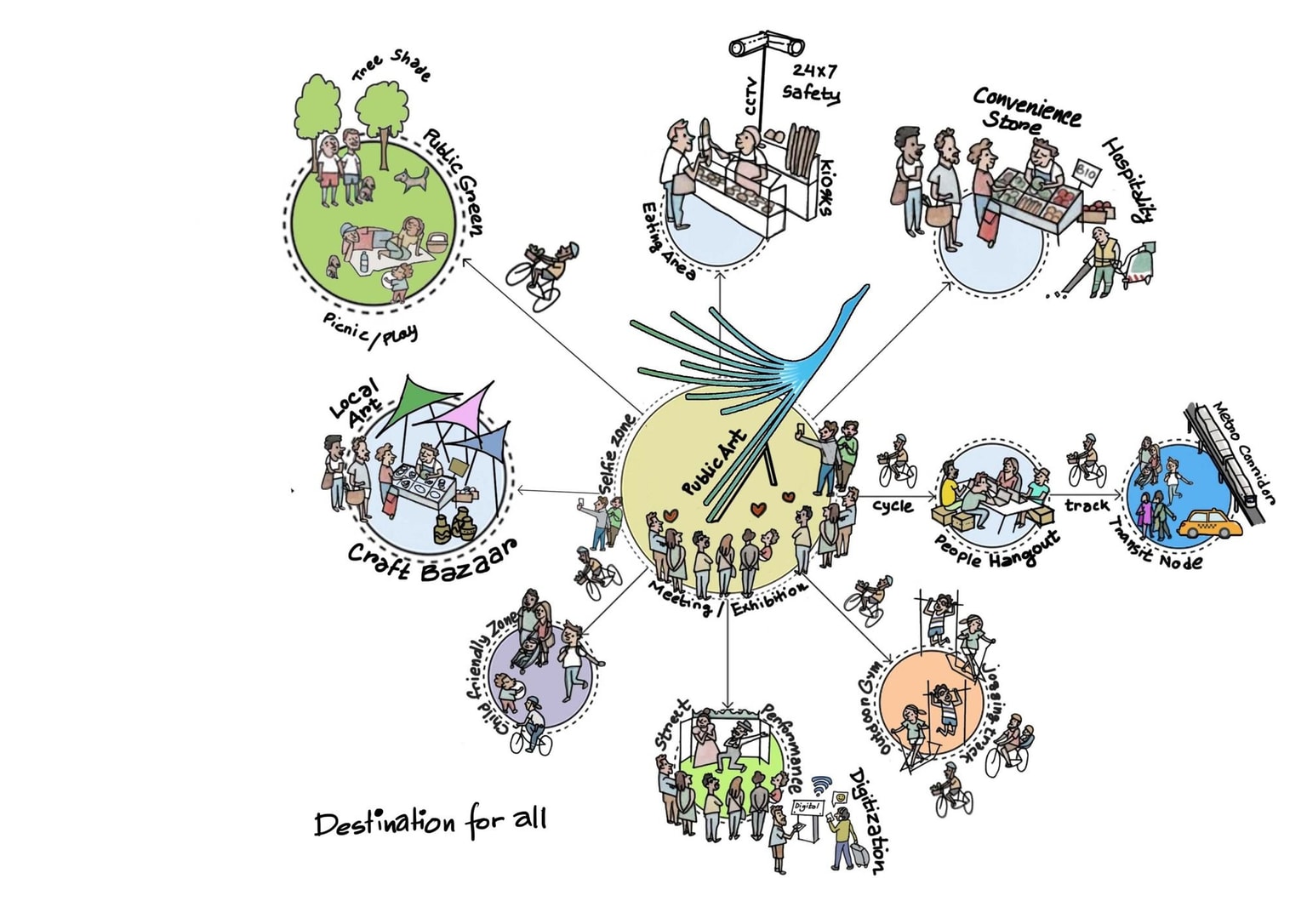
That requires looking beyond the red line of an individual planning application and considering the station in its wider context, its relationship with the surrounding settlement, streets, landscape, infrastructure and existing communities.
If all we achieve is more homes within reasonable walking distance of a railway station, we will have missed the opportunity.
If instead, we use the railway station as the starting point for creating compact, walkable, mixed-use and genuinely sustainable communities, this could be one of the most important shifts in planning for a generation.
The Government may have started with a housing policy. Done properly, it could become a place-making policy. And that is where the real opportunity lies.
Further reading.

The Good City Podcast – Toronto: Growing Pains
We unpack how community‑centred TOD, gentle density, and inclusive design can shape a fairer, more resilient and future‑ready Toronto.

Why the West Midlands is hardwired for growth
The West Midlands’ tech scene has exploded and the region now holds the title of the UK’s fastest-growing tech sector.
Designing Ireland’s green transport revolution
Ireland is at a crossroads in its transport evolution, with a national goal of reducing greenhouse gas emissions by 51% by 2030.