BDP reimagines historic Digbeth Tea Factory as BBC Hub
The adaptive reuse of the historic Tea Factory at Typhoo Wharf has officially completed ahead of the building taking on the role of the BBC’s new Midlands headquarters in Digbeth. Designed to RIBA stage 3 by Howells and delivered by architects from BDP to completion, the project reimagines the former Typhoo Tea factory as a sustainable, flexible broadcast centre that brings new life to one of Birmingham’s most recognisable industrial buildings.
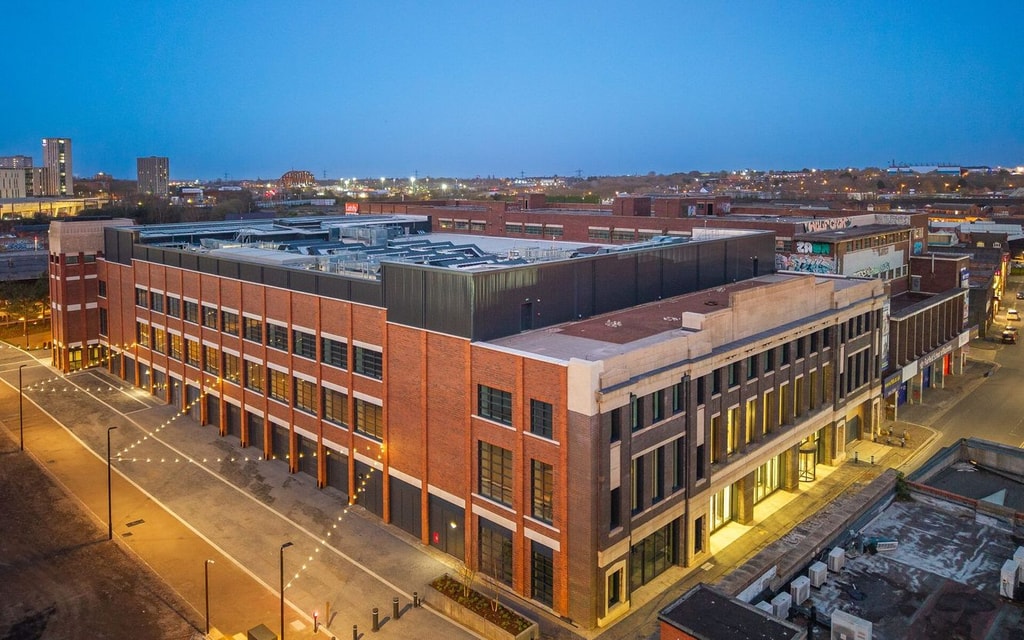
Developed by Stoford in partnership with The Gooch Estate and funded by Aviva Investors on behalf of its Lime Property Fund, the project has been delivered with support from Birmingham City Council and constructed by BAM. The building will now undergo an internal fit out by the BBC ahead of its planned opening in 2027.
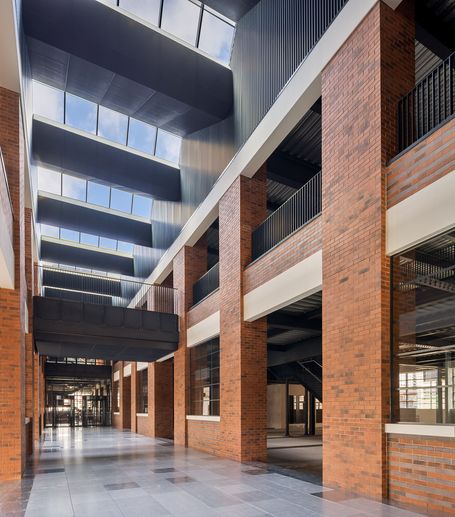
The BREEAM ‘Outstanding’ development carefully retains and celebrates the character of the original 1930s structure, while introducing low carbon design principles and high-performance systems. A new double-height entrance foyer and fully refurbished façade creates a highly visible and welcoming public face, strengthening connections to the surrounding streets and canal network. At its heart, a central atrium runs through the building, acting as a social and collaborative focus for staff and visitors.
Flexible floorplates across the first and second floors have been designed to accommodate a mix of uses, including radio studios, TV production facilities, editing suites and more traditional workspace, alongside shared areas for collaboration and meeting.
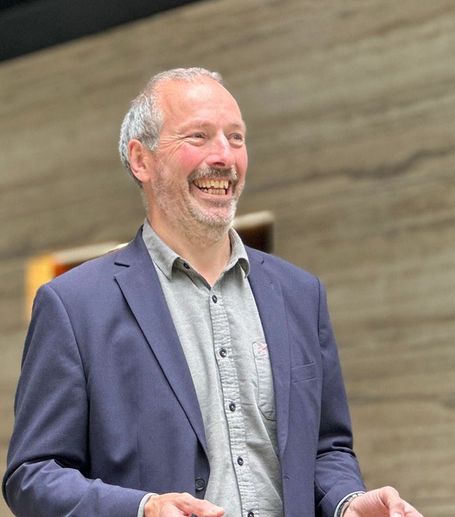
“The Tea Factory brings together heritage and performance in a way that reflects both the character of Digbeth and the future of broadcasting.
“Our approach has been to retain the strength and identity of the original building while introducing the flexibility, environmental performance and technical capability required by the BBC. It demonstrates how existing structures can be adapted to support highly serviced, future-facing workplaces while remaining connected to their context.”
“Working with The Gooch Estate, Aviva Investors and Birmingham City Council, we’ve taken a building with real history and given it a new purpose, one that we hope will have a lasting impact on Digbeth and the wider Birmingham creative scene.
“There have been challenges along the way, particularly in adapting a building like this to meet the BBC’s needs, but that makes the end result all the more significant. To have the BBC as an occupier says a lot about the quality of what’s been delivered, and we are thankful to our professional team and BAM for helping us get here.
“The Tea Factory is an important first step for the wider Typhoo Wharf plans, and we’re looking forward to continuing that journey over the coming years.”
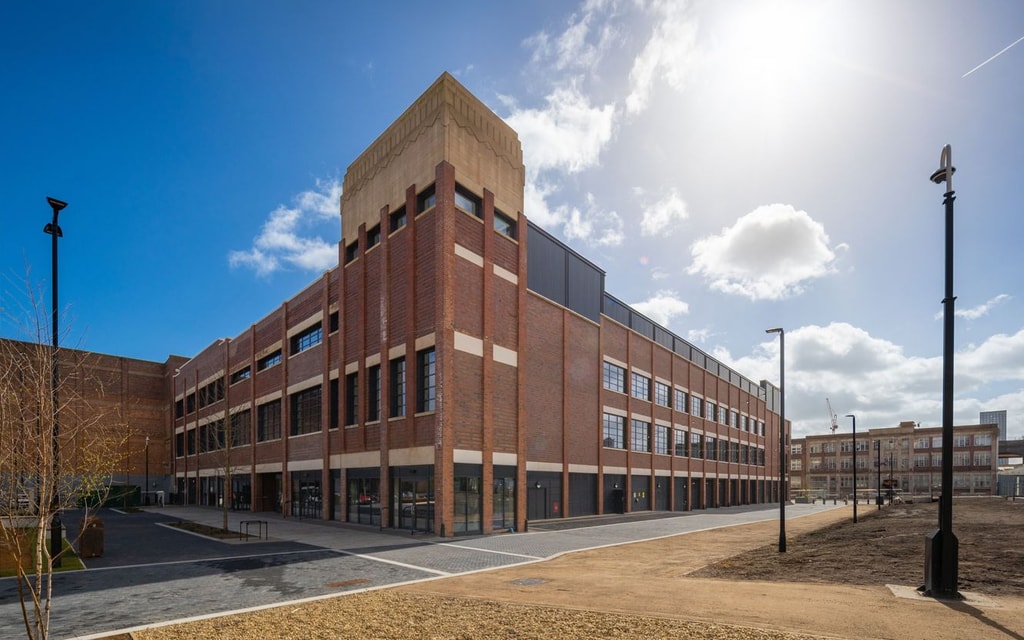
Once the fit out is complete, the building will accommodate key BBC editorial teams including The Archers, BBC Asian Network, BBC Newsbeat, BBC 1Xtra, BBC Radio WM and Midlands Today.
The project forms the first phase of the wider Typhoo Wharf masterplan, a strategic gateway site connecting Digbeth with HS2 and Birmingham city centre, delivering up to 800,000 sq ft of residential, office and hospitality space across more than 10 acres, alongside new public realm that reconnects the site with Birmingham’s canal network.
The relocation of the BBC to Digbeth is part of its wider Across the UK strategy, supporting investment in new productions and strengthening the Midlands as a major creative hub. Located close to Digbeth Loc Studios, the Tea Factory is expected to play a key role in driving further growth, with commissioned analysis forecasting a £282 million economic benefit to the West Midlands by 2032.
As a catalyst for regeneration, the transformation of the Tea Factory demonstrates how heritage-led design can unlock long-term social, economic and environmental value, setting the foundation for the continued evolution of Digbeth as a leading creative and cultural district.