Accessible Is Not Enough
Can a space meet accessibility requirements and still exclude people? The uncomfortable answer is yes.

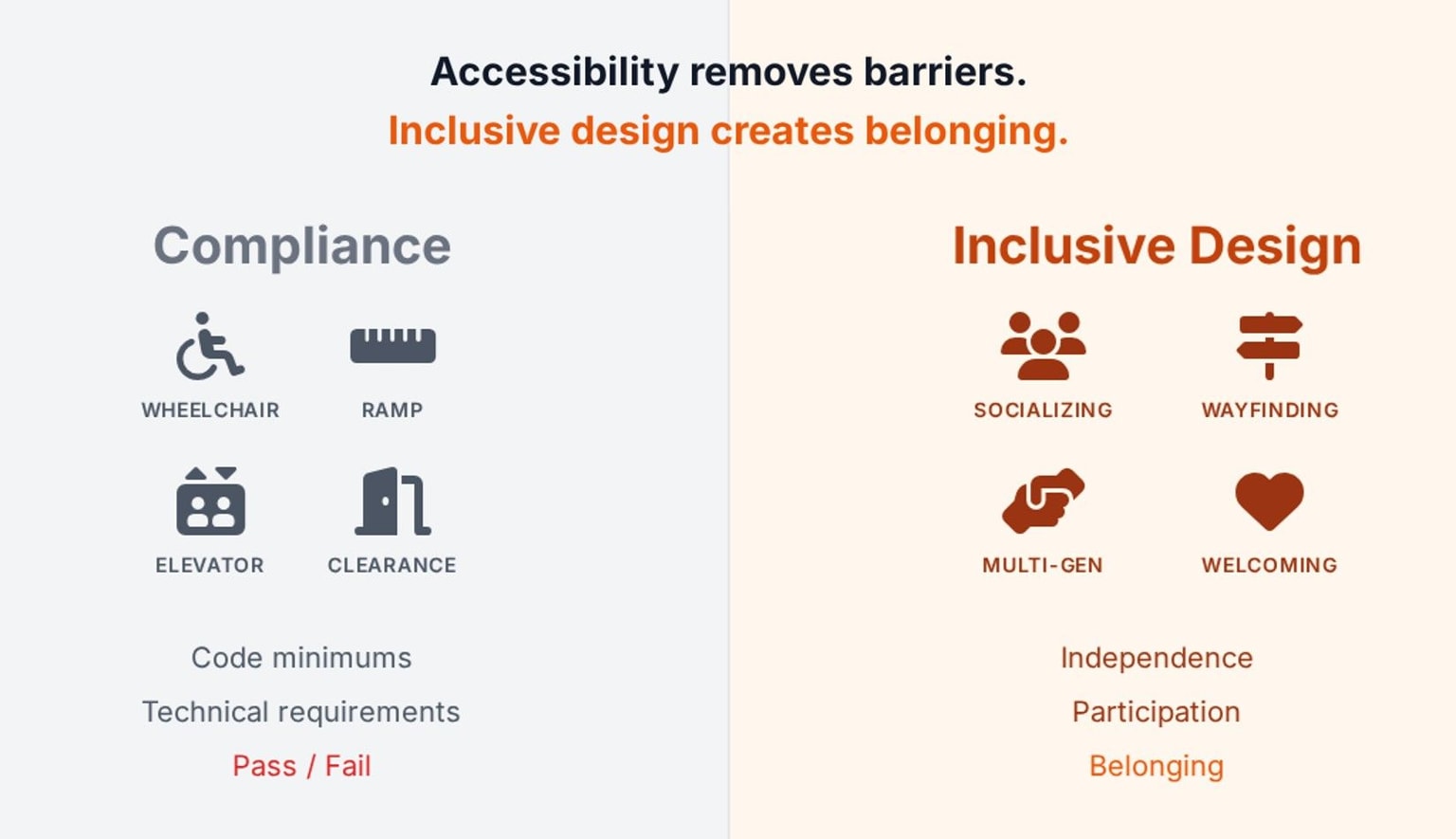
Accessibility standards remove barriers, but inclusive design goes further creating spaces where people can navigate confidently, participate fully and feel they belong.
Can a space meet accessibility requirements and still exclude people? The uncomfortable answer is yes.
The built environment has been shaped by codes, standards and checklists designed to remove barriers and that work has truly mattered. Accessible entrances, elevators, ramps and clearances have fundamentally transformed how people move through our cities and buildings. But somewhere along the way, the focus has shifted. Compliance became the goal. And compliance, by definition, is just the minimum.
Compliance asks a narrow question: have we done enough to pass?
It rarely asks the more important one: does this actually work for people?
It’s within that gap, between what is technically accessible and what is meaningfully usable, that exclusion still lives.
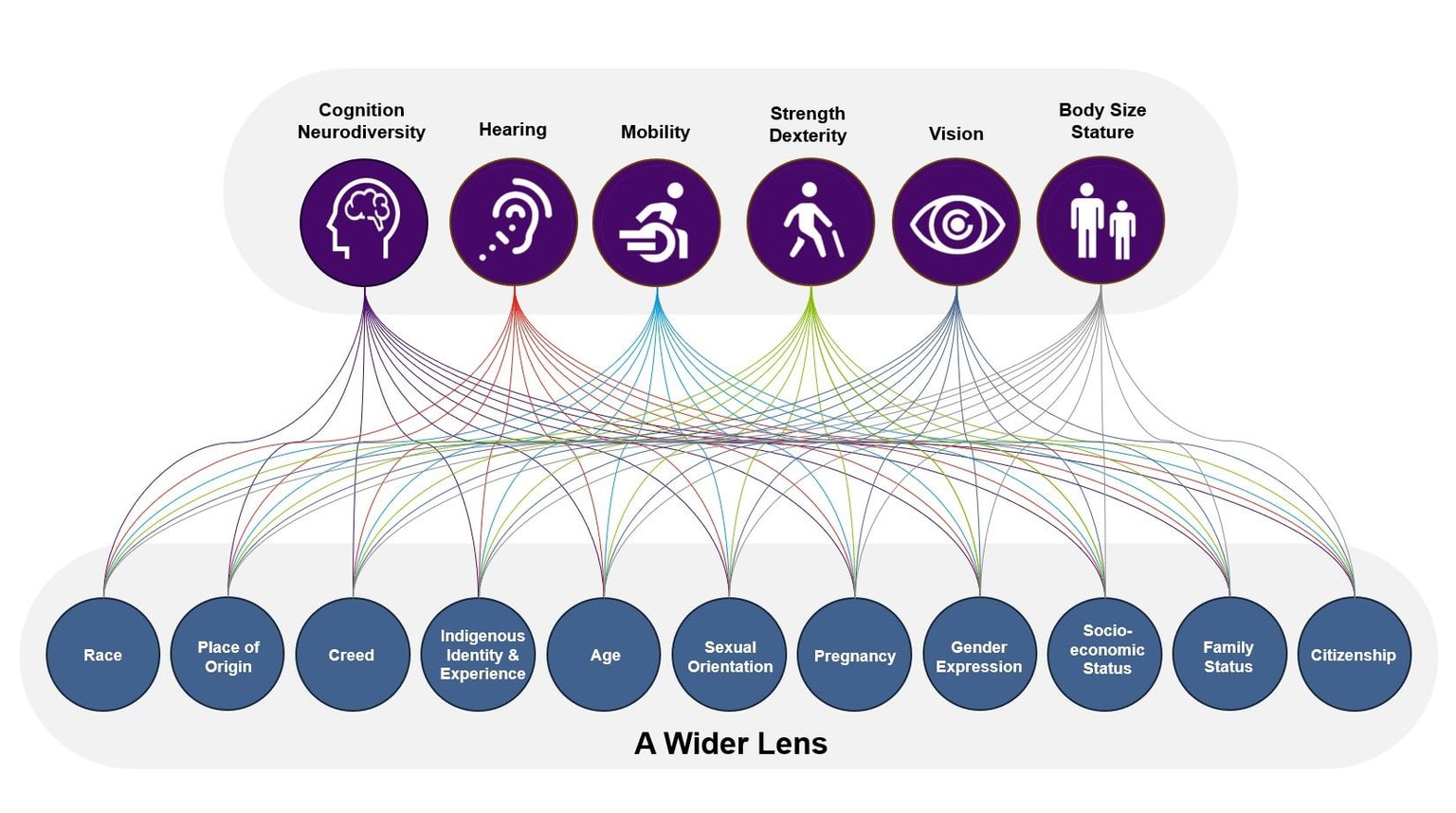
Inclusive design requires a wider lens recognizing that ability intersects with identity, age, culture and lived experience to shape how people move through and experience space.
Travel through almost any “accessible” building and apparent gaps begin to show. Wayfinding is confusing, forcing people to rely on others. Spaces technically accommodate mobility devices, but not comfortably. Environments overwhelm those sensitive to noise, light or stimulation. Nothing is explicitly “wrong”, but something is clearly not right. This is the illusion of accessibility: the assumption that if the checklist is complete, inclusion has been achieved. It hasn’t.
This is because accessibility, as it is commonly practiced, is still too narrow. It often centres on physical mobility alone, reducing people to a single set of needs rather than recognizing the layered, intersecting experiences individuals bring with them. Real life is far more complex.
An older adult with declining vision, a neurodiverse colleague navigating sensory overload, an adolescent recovering from a sports injury, a newcomer interpreting unfamiliar signage. These are not edge cases, they are everyday users of our spaces. And yet, they are rarely where design begins.
Inclusive design begins from a different premise: people experience space through the intersection of ability, age, culture, identity and life stage. This isn’t theoretical, it’s simply how people live. And when we design with that reality in mind, the change is profound. We move away from the idea of an “average user,” recognising that person doesn’t exist. In its place, we begin to design for a spectrum of experiences, creating environments that are more intuitive, flexible and supportive for everyone.
This is about changing the lens through which every design decision is made.
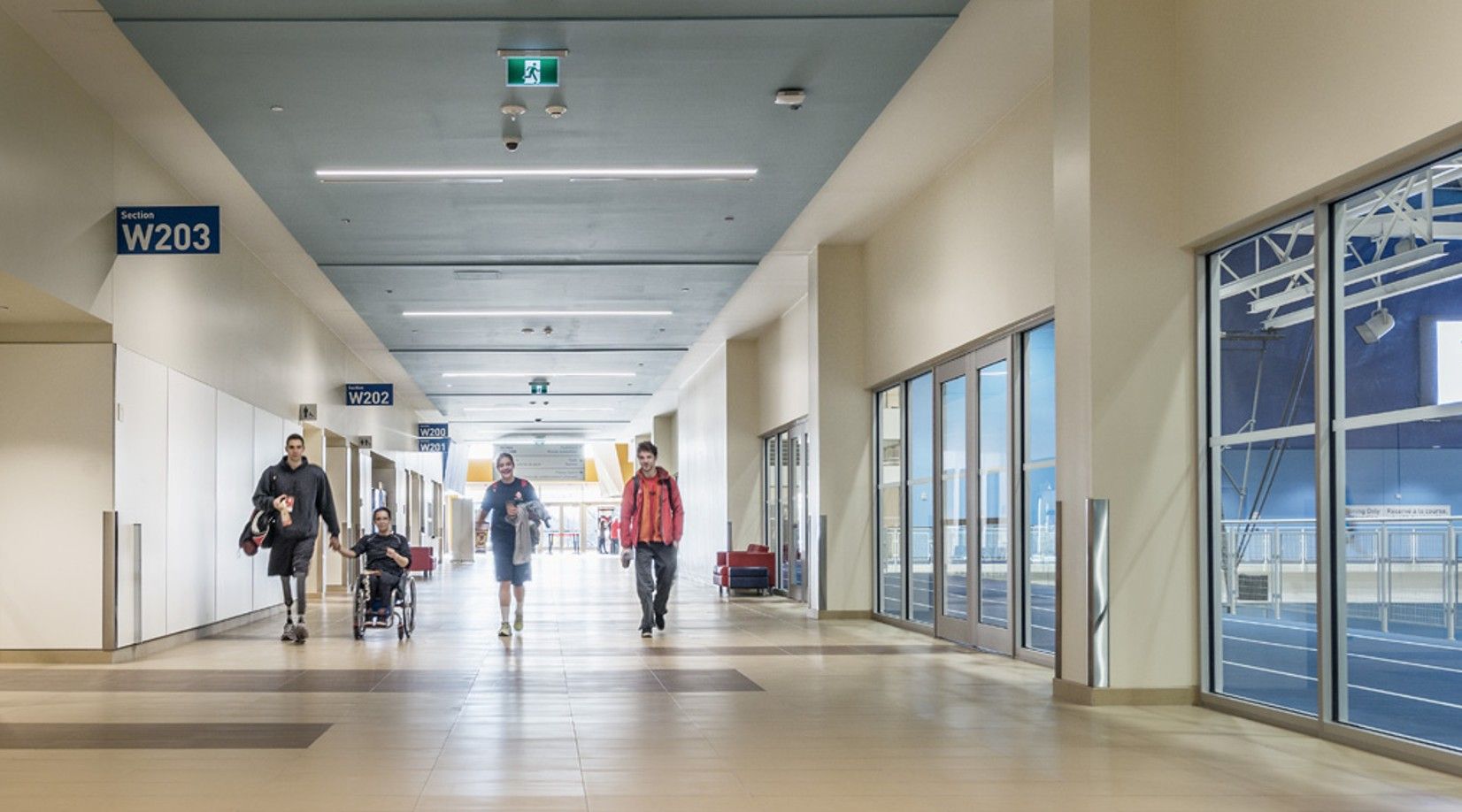
For the Toronto 2015 Pan Am and Parapan Am Games, design moved beyond accommodation creating high-performance environments that supported para-athletes and delivered lasting benefits for future community use.
We've seen this play out across a variety of our projects.
During the Toronto 2015 Pan Am and Parapan Am Games, the ambition wasn’t simply to accommodate para-athletes, it was to design environments that could support elite performance. That meant rethinking circulation, sightlines, amenities and spatial relationships in ways that conventional standards didn’t fully anticipate.
What emerged wasn't "specialized" environment. It was a better one.
In legacy use, after the games, those same design decisions created spaces that are more resilient, adaptable and inclusive for entire communities. Designing for the highest level of need elevated the final outcome.
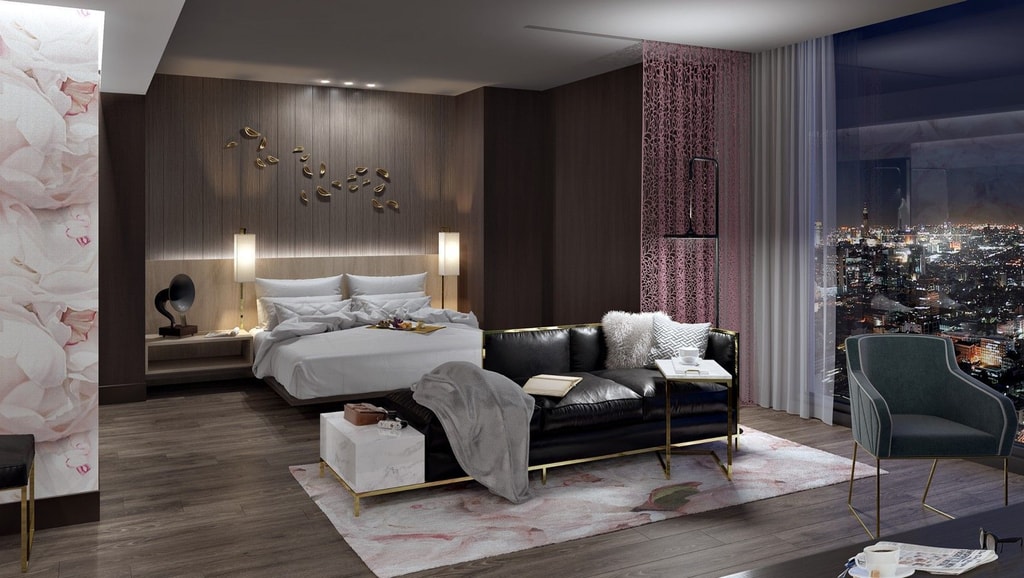
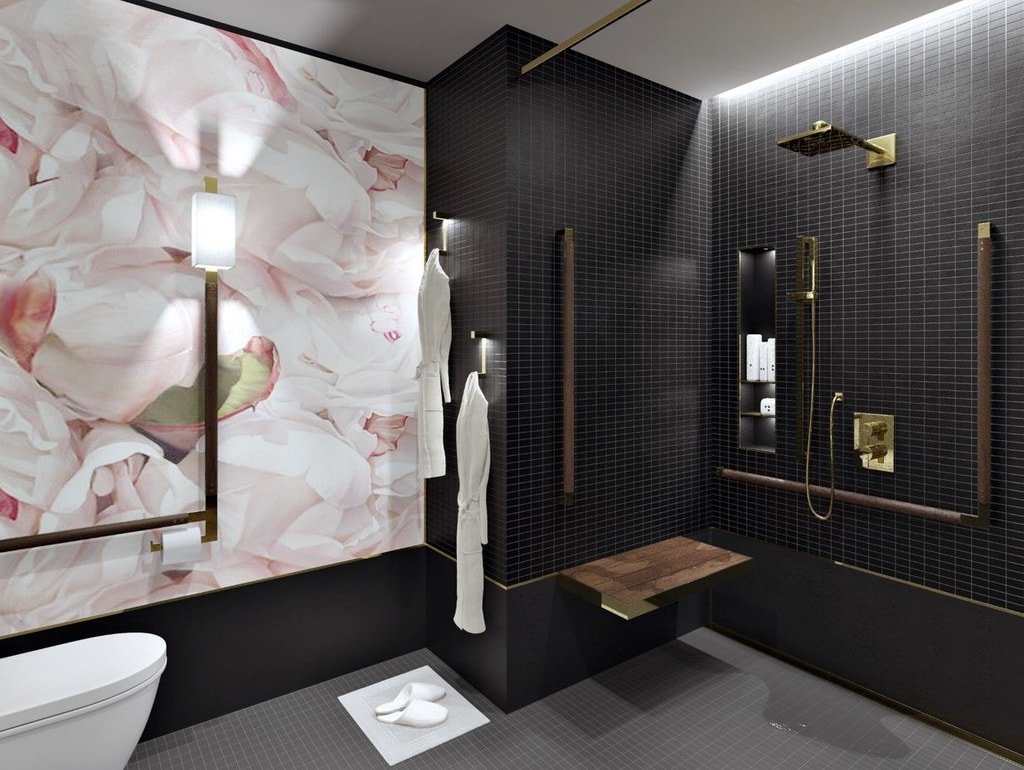
In the hospitality sector, we challenged another assumption: that accessible hotel rooms must look and feel institutional. For years, “barrier-free” has been synonymous with stripped-down, clinical environments - functional, but rarely desirable. By integrating flexibility, intuitive usability and sensory awareness into a high-quality design language, we created spaces that are both inclusive and aspirational. Not rooms set apart, but rooms that anyone would choose.
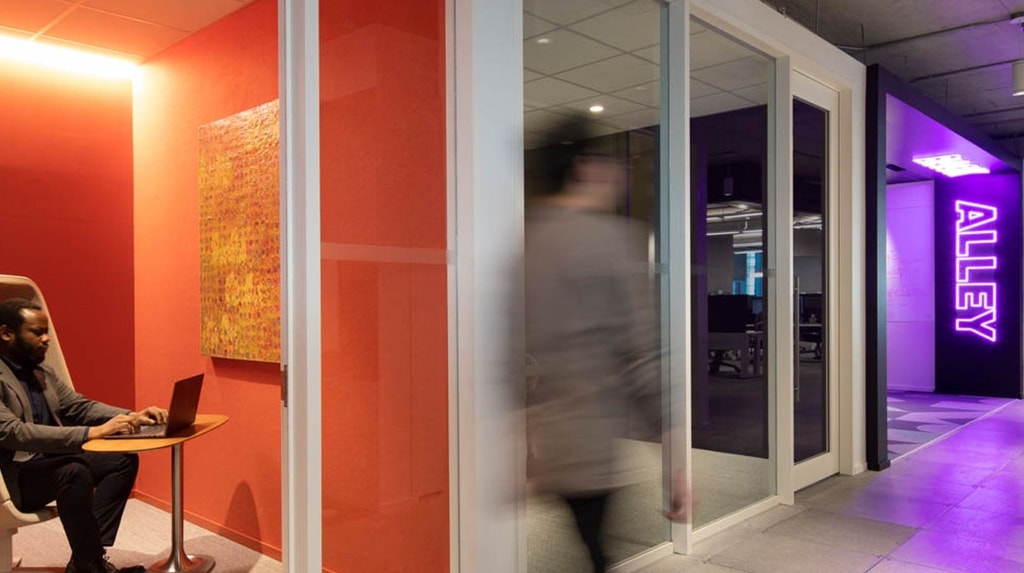
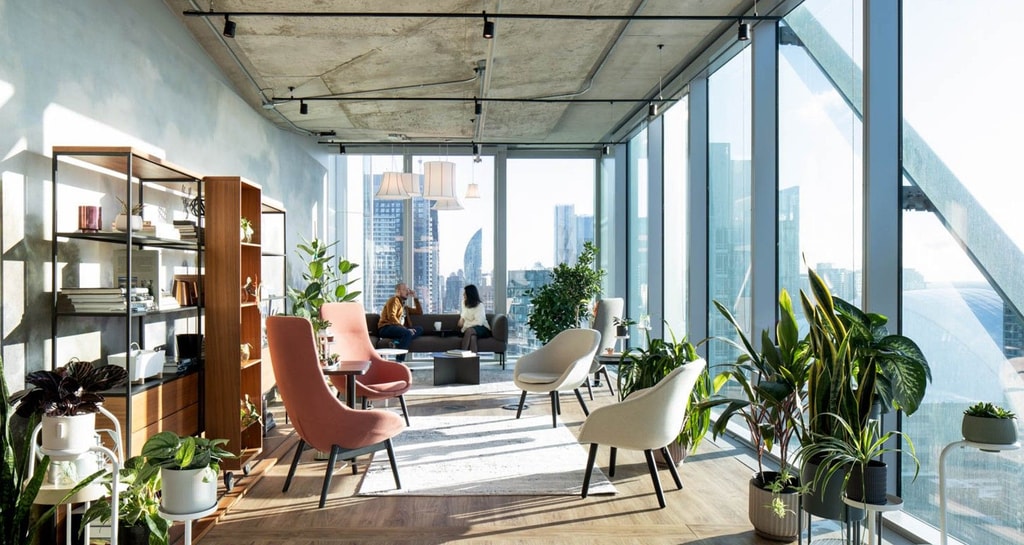
We need to be more honest about how we measure success in the built environment. Passing an accessibility audit is not the same as creating an inclusive space and meeting code does not mean people feel confident, independent or welcome. If someone hesitates before entering, struggles to navigate or feels out of place, then the design has fallen short, regardless of compliance. That may be uncomfortable to acknowledge, but it's necessary because expectations are changing.
Clients, communities and users are no longer satisfied with environments that are technically accessible yet experientially lacking. They're asking for spaces that reflect the diversity of how people actually live, work and move through the world.
The conversation needs to move beyond access. Access is about entry. Belonging is about experience. Access gets you through the door; belonging shapes whether you stay, participate and thrive. This is a fundamental adaptation in the understanding of good design. And it has real implications, socially and economically. Spaces that work better for people perform better. They attract, retain and engage a broader range of users. They are more resilient, more adaptable and ultimately more valuable.