Bringing people together
Boxpark Wembley, London, UK
The Good City.The primary function of cities is to bring people together. In a world of social media and online meetings, face to face contact still matters.
This is important to commerce and retailing, to teaching, research, innovation, economic activity, sport, healthcare, culture and government. While many of these things can be done online, they are done more effectively in person. The role of cities is to provide the physical space to facilitate this human interaction. Where this is done well, the outputs are greater than the sum of the individual inputs – the good city amplifies human activity.
Perhaps the most important role for cities is as place of community, a place where people from different backgrounds can live in supportive communities.
Five ‘Good City’ solutions
Understanding urbanism
Urbanism is about designing cities for people at the human scale, to make life better, and to create places that will remain valuable over time. But it is about more than design, it involves economics, social issues, and environmental factors all of which need to be considered in creating good places.
Walkable neighbourhoods
To bring people together the Good City must be walkable and support assistive mobility devices. Transport infrastructure and urban planning need to ensure that local journeys are possible without the use of cars. Plans must ensure the creation of connected street networks, not dominated by cars, that are safe, overlooked and well designed with plenty of pedestrian activity.
Encouraging a mix of uses
The Good City mixes up uses; housing and workspace, shops, local facilities, schools and leisure activities. The aim is to ensure that people can do most of what they need to do every day within a short walk of their home, a concept that has become known as the 15 minute city. This is efficient, cuts down on the need for transport and means that places remain lively and safe throughout the day.
Welcoming public realm
People live and work in buildings, but they come together as citizens in public spaces; in streets, squares and parks. From parades and festivals to meeting with friends and family, a city’s public realm provides the spaces that foster civilised city life. encourage people to live together.
Sustainable density
The Good City exists to concentrate and focus human activity. This is based on the number of people living and working within a defined area (density) as well as the amount of development (Floor area Ratio). The Good City achieved this intensity without compromising on the quality of housing, community, wellbeing and quality of life.
Our work
-1584x1267.jpg?u=2024-11-04T13:50:02.336Z&w=640&q=90)
Geylang Serai Cultural Belt
The project revitalizes a historically significant area in Singapore, transforming it into a vibrant hub for local residents and visitors.
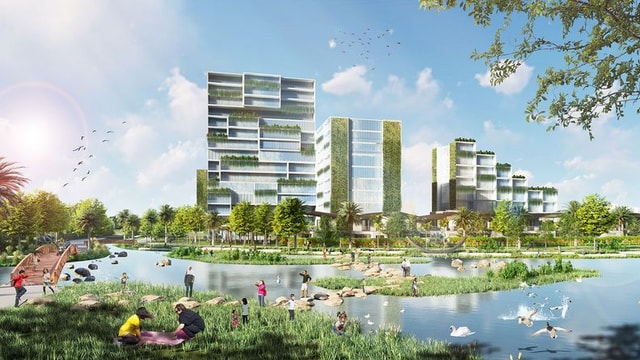
Patimban New City Masterplan
We’ve been appointed to design a 528 hectare mixed-use waterfront development in Patimban New City, Indonesia.

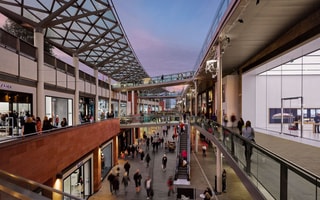
Boxpark Wembley
Boxpark Wembley is an innovative cultural and dining destination in the heart of Wembley Park.
Key contacts
.jpg?u=2025-10-24T10:34:48.840Z&w=320&q=90)
Natalia Uribe
Cities Director I Urban Futures, BDP
Related expertise
-1330x831.jpg?u=2025-05-21T09:28:30.431Z&w=320&q=90)
Buildings and places
Our multidisciplinary experts design every element of the city with a holistic urbanistic mindset.
-1330x831.jpg?u=2024-11-22T20:47:08.091Z&w=320&q=90)
Landscape and biodiversity
We design green spaces that support health, enhance biodiversity, and build resilience to climate change.
Urban design
Our urban designers are experts in crafting places that follow the principles of The Good City.